
You're standing at a kitchen table with a tape measure in one hand and a phone in the other, trying to price a leak, a repipe, or a water heater swap before the customer loses patience. If all you've got is a number scribbled on the back of an invoice pad, you already know how this ends. They call two other plumbers, compare your half-formed total to a polished document, and your job gets pushed to the bottom of the pile.
A solid plumbing estimate template fixes that fast, but not because it looks neat. It works because it turns your guess into a visible scope, a pricing method, and a payment path the customer can understand. That's what protects margin, keeps change orders clean, and gives you a record when somebody calls back months later saying, “That wasn't included.”
Why a Blank Page Costs You the Job
The worst estimate I ever saw was also the simplest. It was a number, a date, and a quick promise that the work would be “taken care of.” The homeowner didn't sign. He said he'd think about it, and by the time he was ready, another plumber had handed him a cleaner, more confident proposal.
A vague number creates doubt on both sides. The customer wonders if you forgot something, and you wonder if you left room for the stuff you know can pop up behind a wall or under a slab. That's where a structured estimate earns its keep, because it gives the customer a clear scope and gives you a record of what was promised.
Practical rule: if you can't point to the line that covers a task, you probably don't have it priced.
A good plumbing estimate template is also a sales tool. It signals that you run a real business, not a side hustle, and that matters when a homeowner is deciding who gets the job. If you want a quick check on how visible your business looks before the estimate even lands, RecensioAI's local SEO checklist is a useful companion resource for making sure your public presence doesn't undercut your quote.

That kind of document does more than win the first yes. It gives you something defensible when the customer remembers the job differently later, and it creates room for change orders without sounding like you're making excuses. For the rest of this, think of the estimate as a quote-to-payment workflow, not a price sheet, because that's where solo plumbers keep or lose money.
Anatomy of a Plumbing Estimate Template
A usable estimate starts with the boring stuff, and the boring stuff is what keeps the job clean. Put your business name, license number, customer name, job-site address, estimate number, and date at the top. That header is what lets you sort jobs later without digging through texts and photos.
Build the body from measurable pieces
The middle of the form should break out labor, materials, equipment, subcontractor work, permits, and disposal. Each line needs quantities and units, because “pipe” doesn't tell anyone anything useful. “32 feet of 3/4-inch PEX” does.
The summary block comes last, and it should show subtotal, markup, tax, deposit, balance due, and a validity date. The customer should see where the number comes from, not just the final total. If an item is excluded, say so next to the estimate instead of hoping you can explain it later.
A texted total is easy to send and easy to lose. A structured estimate is harder to ignore and much easier to enforce.
Versioning matters too. If you revise the job after a second walk-through, date the new copy and mark it clearly so the earlier number doesn't keep floating around. That becomes especially useful when a customer compares multiple plumbers or when a repipe turns into a larger scope after inspection.
If you want a starting point you can copy into Word, Google Docs, or your estimating software, the AurenWell template library gives you a simple reference format for building the same structure every time.
Pricing the Work Without Leaving Money on the Truck
A lot of plumbers underprice jobs because they price the wage, not the actual labor. Your estimate should use task hours multiplied by a fully burdened rate, not the hourly wage alone. Payroll taxes, insurance, and benefits change the actual cost of labor, and the estimate has to reflect that.
Price material waste by system, not by gut feel
Different materials deserve different allowances. Copper and PEX behave differently from cast iron, and PVC or CPVC don't waste the same way as a tight repipe with lots of cuts and turns. Hangers and miscellaneous items also need their own allowance, because those little parts disappear from memory and still show up on the bill.
| Material Waste and Add-on Allowances by Pipe System | Typical Waste Allowance | Notes |
|---|---|---|
| Copper | 5% to 10% | Better to separate straight runs from tight runs |
| PEX | 5% to 10% | Easy to undercount fittings on longer runs |
| Cast iron | 5% to 7% | Heavier handling and layout matter more |
| PVC or CPVC | 3% to 5% | Cleaner cuts, but fittings still add up |
| Hangers and small items | 10% to 15% | Good place for the forgotten hardware |
| Fittings and accessories | 10% to 15% of pipe-material cost | Keep them explicit instead of hiding them in markup |
A better way to think about the number is this. Direct labor goes in one bucket, materials in another, and risk contingency in a third. Overhead and profit shouldn't be buried inside a mystery multiplier, because the customer needs to see what's fixed, what's an allowance, and what could move if the walls open up.
For a related pricing reference outside the plumbing trade, whole-house filtration installation pricing shows how equipment-heavy jobs benefit from line-item pricing instead of one flat number.
Field rule: if a fitting or accessory can be counted, count it. If it can't be counted yet, label it as an allowance.
A small bathroom repipe makes the math obvious. List the pipe by footage, add fittings and stub-outs, price labor by task, then add permit and disposal as separate lines. If you can explain each line to the customer without shrugging, the estimate is probably honest enough to send.
Writing Deposit Terms, Validity, and Change Orders
The small print shouldn't read like legal fog. It should tell the customer exactly when money is due, how long the price stays live, and what happens if hidden damage changes the scope. That's the part most estimate templates handle badly, because they stop at the signature and don't define the rest of the job.
Start with the deposit trigger. Say when it's due, what event activates it, and whether it's tied to scheduling, mobilization, or a specific milestone. Then define the balance-due event in the same plain language, so there's no argument about whether “completion” means rough-in, final trim, or after the last inspection.
Keep concealed conditions in the estimate, not in your head
Hidden plumbing problems are normal. Corroded connections behind tile, cracked slab lines, and surprise code issues are part of the trade, not a personal failure. Your estimate should say what you can see, what you're assuming, and what will require written approval before extra work starts.
Use a change-order block with a unit price sheet if you can. That way, if the customer approves extra piping, added access, or restoration work, you're not inventing a number on the fly. Keep the exclusions list blunt, too, drywall patching, tile work, painting, hazardous-material disposal, and permit fees when you're not pulling the permit should all be stated clearly.
For a cleaner structure on terms language, the estimate terms and conditions guide is a practical reference point for how to phrase the handoff without burying the scope.
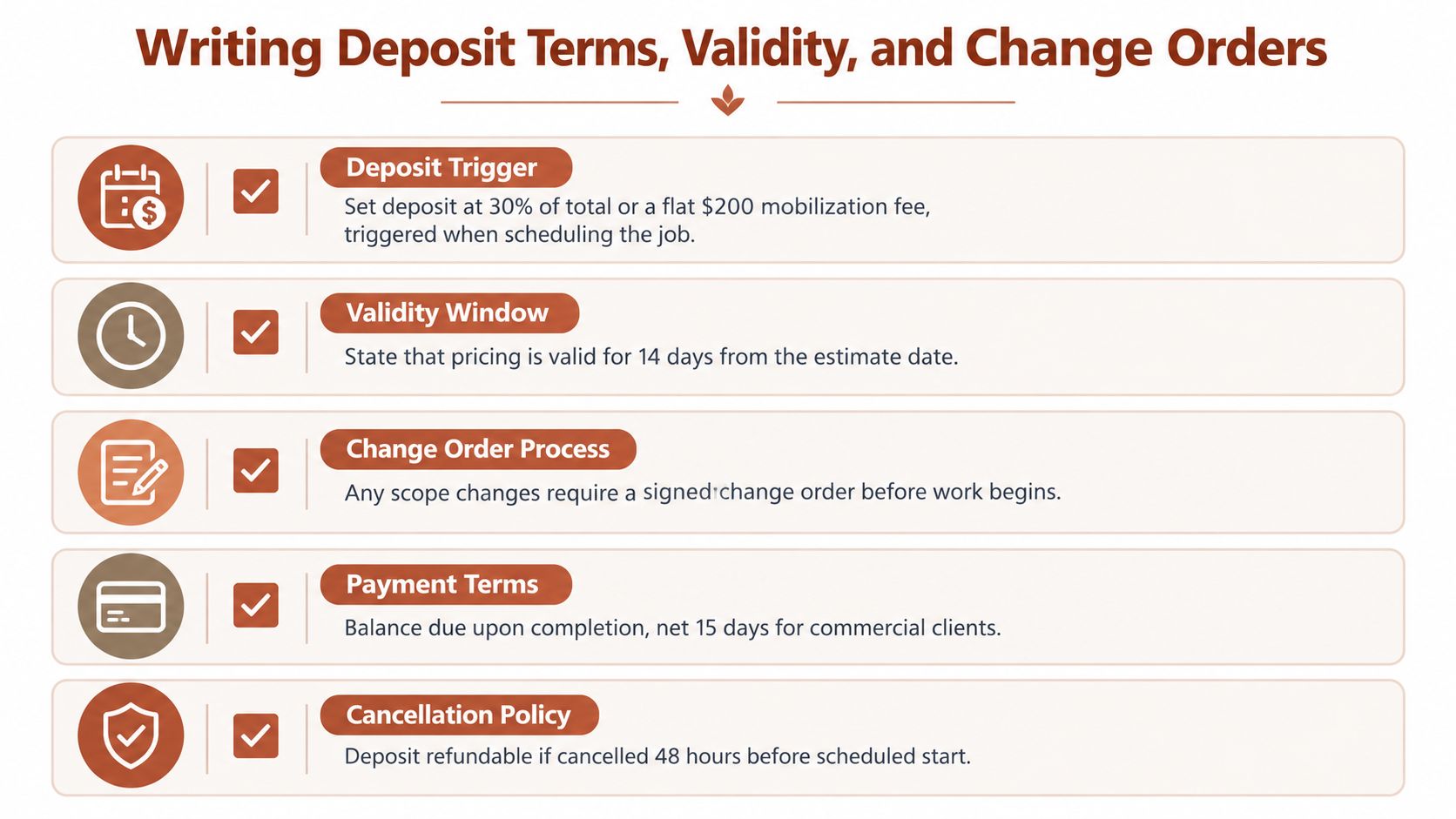
Plain-language rule: if the job can change after opening a wall, the estimate needs a written change-order path before the wrench turns again.
A validity window belongs here as well. Keep it short enough that supplier pricing doesn't go stale, and say so directly. Once the customer signs, your estimate should define the scope, the price rules, and the points where a new approval is required.
Sending, Approving, and Signing the Estimate
A customer on a phone doesn't want a bloated attachment they have to download, save, and search for later. They want one link, one screen, and a clear path to approve or ask a question. That's why the sending step should be as simple as possible.
Treat approval as a live event
When the customer opens the estimate, the first thing you care about is engagement, not just delivery. A read receipt tells you the document was opened. Approval tells you the job moved from maybe to yes, and that's a very different signal when you're trying to line up material, labor, and schedule.
Browser-based signing is the cleanest path for a solo plumber. The customer reviews the scope, adds notes if needed, signs, and can pay a deposit at the same time. That single click matters because it turns acceptance into cash flow instead of leaving you with a signed promise and no money in the bank.
For mobile signing workflows, sign PDFs free in your browser is a handy reference if you're comparing how a simple sign-and-return flow feels from the customer side.
You also want an audit trail. Capture the timestamp, the version, and any customer comments tied to the approval. If the estimate includes preliminary hydraulic assumptions, keep the allowance visible, especially on longer runs where a field convention like adding 50% of developed pipe length for fittings and valves can be replaced later by a real fitting schedule as the design tightens up.
Once it's approved, the estimate stops being a draft and becomes the scope of record. That's the point where the job should convert cleanly into the invoice path without anyone retyping line items from scratch.
Putting the Template to Work Inside AurenWell
The test isn't whether the estimate looks good in a folder. It's whether the document survives the handoff from quote to signed approval to money collected. A template that can't move through that chain is just paperwork with nicer fonts.
Build once, then carry the approved scope forward
In a workflow tool like AurenWell, you can build the estimate from the same line-item structure you'd use on paper, then send it to the customer as a browser-friendly document. The approved version can be converted into an invoice in one step, which matters because nobody wants to rekey fixture counts, labor lines, or deposit terms after the customer already said yes.
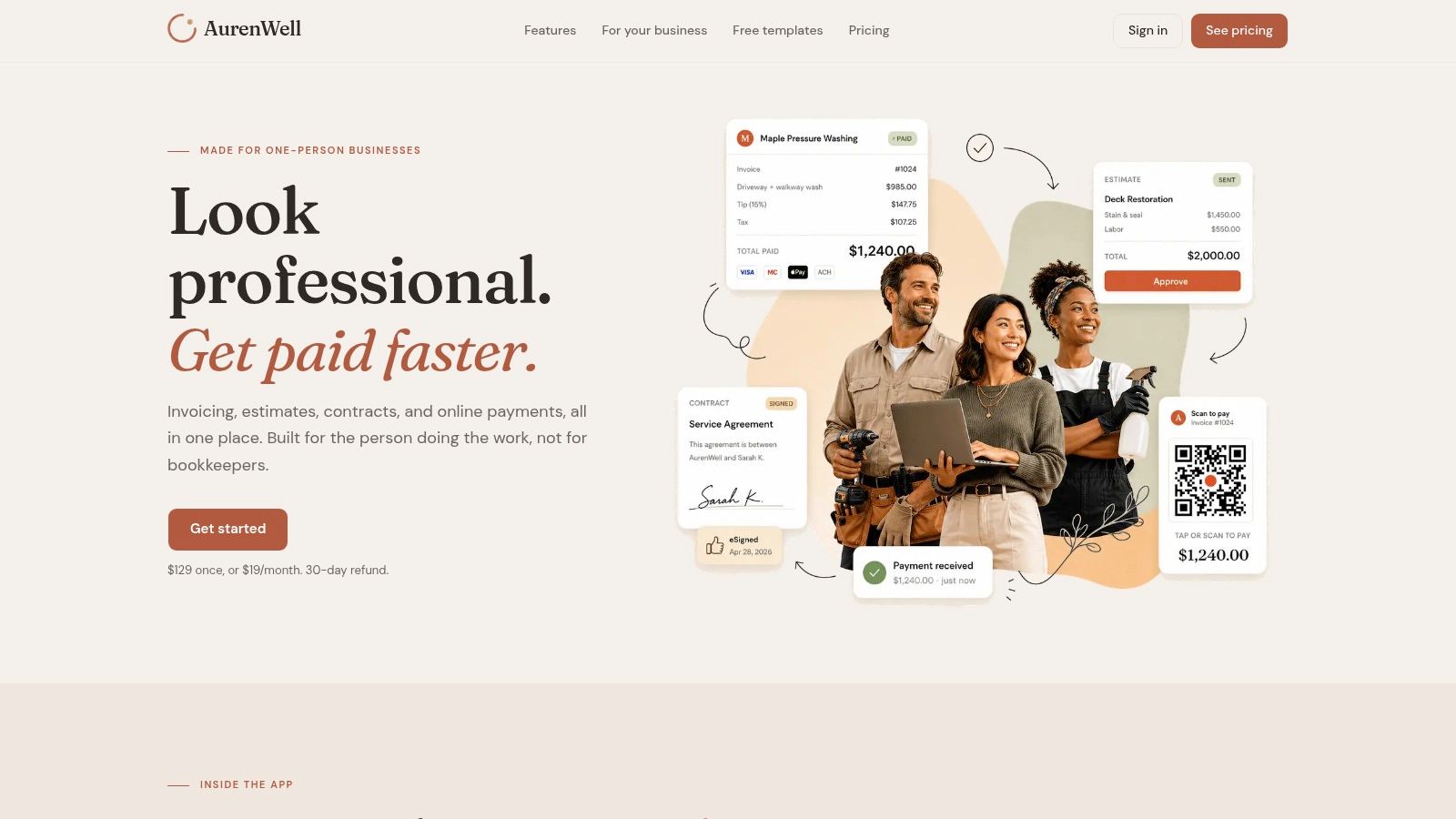
That same flow keeps the deposit tied to the estimate record and the final invoice tied to the approved scope. If you're in the truck, the browser can live on the phone, and the document still behaves like a proper job file instead of a scattered set of screenshots and text threads.
Keep payment and follow-up on the same track
The payment side matters just as much as the approval side. A payment link or QR code on the invoice keeps the customer moving, and polite reminders at 3, 7, and 14 days help you chase less and collect faster. When the record stays in one place, you can also export the job as PDF for the document and CSV for the books without losing the original estimate history.
If you want to see how the estimate module is organized, the estimates feature page shows the document flow in plain terms. The point isn't fancy software. It's reducing the number of times you have to touch the same job data before you get paid.
Field-Tested Tips for a Template That Holds Up
The best templates aren't the prettiest ones. They're the ones that survive callbacks, small disputes, and the weird jobs where half the wall is already open and nobody knows what the previous plumber did. After enough of those, a few habits start to matter more than design.
Keep the document honest from revision to invoice
Version every estimate. Date every revision. Attach site photos when there's any chance of a misunderstanding later, and never send a new price without restating the exclusions. That keeps the customer from comparing apples to a different job entirely.
The common failure modes are predictable. Small materials go missing, markup gets counted twice, supplier pricing gets copied from an old job, and the permit question gets left vague until the inspector shows up. If you've been burned before, it was probably one of those.
Truck-side checklist
- Scope confirmed: every fixture, pipe system, and access point is named.
- Assumptions written: concealed conditions and inspections are spelled out.
- Deposit set: the trigger and amount are clear.
- Validity dated: the number won't drift forever.
- Change orders defined: extra work needs written approval.
- Conversion path ready: approved estimate turns into an invoice without retyping.
A good plumbing estimate template doesn't just help you win the job. It protects the margin after you win it, and that's where solo plumbers either stay busy or spend their evenings chasing money. Tighten the form, tighten the terms, and make the approval flow as easy as the first hello at the door.
If you're ready to stop sending estimates that die in a text thread, build your next one with a template that includes scope, deposit terms, approval, and invoice handoff from the start. Open your current form, compare it against the workflow above, and tighten the missing pieces before the next call comes in.