
A landscaping service list shouldn't be a catalog of every task you can perform. That approach makes buyers compare isolated prices, leaves you with scattered scheduling, and turns profitable work into unpaid estimating. A stronger menu combines recurring maintenance, seasonal add-ons, higher-value projects, and paid advice, so each offer supports the next one.
The gardening and grounds maintenance market is large enough to support different business models. The global gardening and grounds maintenance services market was estimated at USD 330.58 billion in 2024 and is projected to reach USD 484.79 billion by 2030, with recurring garden and grounds maintenance forming the foundational service layer in a separate market estimate. Grand View Research's landscaping services analysis shows why a solo operator shouldn't dismiss maintenance as low-value work. Repeat visits create the billing rhythm that makes seasonal and project work easier to sell.
The ten offers below are organized around that reality. Each one connects scope to quoting, scheduling, profitability, deposits, contracts, and payment collection. Use estimates for approval, service agreements for recurring work, and invoices that make labor and materials visible. Exayard landscaping estimating software is another option for preparing landscaping estimates, but the important decision is the workflow, not the brand: define the work before you promise it, then collect payment through a process you can repeat.
1. Lawn Maintenance and Mowing
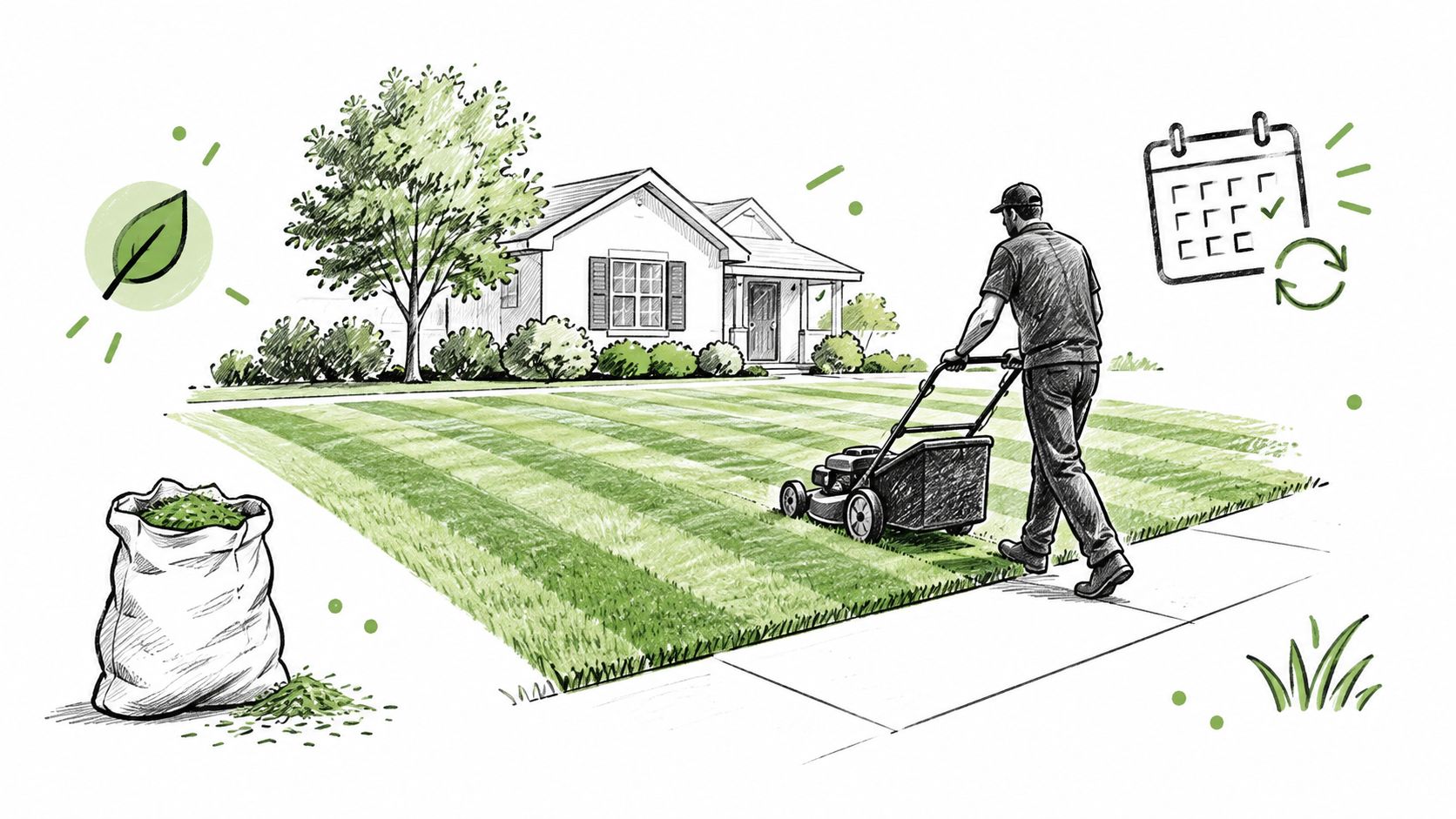
Lawn mowing is the entry point for many landscaping businesses, but the sellable offer isn't “cut grass.” It's a scheduled property-care service with a defined visit scope. A basic visit can include mowing, edging, blowing hard surfaces clean, and a quick visual check for issues that need separate approval.
Offer weekly, biweekly, or seasonal schedules only when your route can support them. A monthly visit may suit slow-growing lawns or properties with limited appearance requirements, but it shouldn't be priced as though it takes the same time as a frequent route stop. Your estimate should identify lawn areas, access limitations, grass height conditions, trimming boundaries, bagging or disposal requirements, and anything excluded.
Practical rule: Price the route, not just the blade time. Travel, loading, fuel, communication, and payment collection all belong in the service decision.
Route density is one of the clearest profitability levers for a solo operator. Independent industry benchmarking indicates that reducing driving between jobs from 60 minutes to 20 minutes can recover more than one billable hour per day, while shorter drive time can increase revenue capacity without adding labor or overhead. The Level CFO landscaping benchmarks support organizing your service area geographically rather than accepting every distant lawn.
Use recurring invoices for established accounts and attach completion photos when the property or customer expects proof of service. Track actual time per visit, including travel, then compare the result with the quoted price. If payments become late, automated reminders at three, seven, and fourteen days can create a consistent collection process through AurenWell, while online payment links reduce the back-and-forth after each visit. For a broader lawn-care perspective, Barefoot Organics' natural lawn care explanation provides useful context for describing care beyond mowing.
2. Maintenance Contracts & Property Management
A maintenance contract should sell a defined operating relationship, not an unlimited list of tasks. Package mowing, trimming, edging, and routine cleanup around the property's appearance and planned visit frequency, then price the labor and travel the schedule requires.
This offer suits homeowners with demanding properties, rental properties, condominium associations, small commercial sites, and property managers. Recurring work supports baseline revenue and steadier scheduling, while vague scope can consume profit through extra visits, neglected areas, storm debris, or unplanned requests.
Build the agreement around terms the customer can verify:
- Frequency: State the planned visit rhythm and how weather or seasonal growth may change timing.
- Scope: List mowing, trimming, edging, blowing, bed maintenance, cleanup, and disposal separately.
- Exclusions: Quote tree removal, irrigation repair, major pruning, storm cleanup, and new installations separately.
- Payment terms: Specify billing dates, due dates, cancellation rules, and the response when access is unavailable.
Line-item pricing makes the package easier to sell and revise. If a client removes bed maintenance or adds seasonal color, change that item without rebuilding the full agreement. Use AurenWell's guide to lawn mowing contracts to structure the agreement and document customer responsibilities.
Inspect the property before quoting, record access conditions, and obtain a mobile signature. Store the signed agreement with the client record, then schedule recurring invoices for the selected billing cycle. Review the scope at set intervals, especially after service requests begin expanding. The most effective contract clearly defines the visit, the price, and the customer's responsibilities, so crews know what to schedule and the office knows what to bill.
3. Seasonal Cleanup and Debris Removal
Seasonal cleanup is a natural expansion offer because the customer already knows you from regular maintenance. Spring work may involve clearing winter debris, removing damaged vegetation, cutting back neglected growth, and preparing beds. Fall work often involves leaf collection, branch removal, final trimming, and preparing the property for dormant months.
The mistake is quoting “yard cleanup” without defining the volume or disposal responsibility. A small residential cleanup and a property with heavy leaf accumulation may look similar from the street but require very different labor, loading time, and disposal costs. Inspect the site, photograph the conditions, and describe what the price includes before work begins.
Price the mess you can see, and state what happens when the mess is larger than expected.
Existing mowing clients are the easiest audience for this offer. Pre-schedule fall work before the season becomes crowded, then send an estimate that separates labor, hauling, disposal, and optional bed preparation. A customer can approve the base cleanup while declining a lower-priority add-on without forcing you to rewrite the entire quote.
Good add-ons include mulch, bed edging, pruning, and plant removal. They should remain separate line items because they carry different labor and material assumptions. Track disposal receipts and dump fees as expenses, not as invisible overhead. Send the invoice as soon as the approved scope is complete. Seasonal work often competes with a short service window, so delayed billing can leave cash tied up while you move to the next route.
A spring or fall cleanup package can be profitable when it follows an existing route. It becomes less attractive when you drive a long distance for a one-off property with uncertain debris volume. Use the estimate to protect the margin before you load the truck.
4. Mulching and Bed Preparation
Mulching works best as a seasonal add-on, not a standalone material sale. Define the scope: bed cleanup, weed removal, edging, delivery, spreading, raking, and cleaning nearby hard surfaces. Quote soil correction or plant removal separately, because those tasks can change labor and disposal requirements.
Material choice changes both the customer's result and your margin. Hardwood mulch, dyed mulch, pine straw, stone, and other finishes differ in purchasing, handling, appearance, and future maintenance. Confirm supplier availability, delivery access, and product condition before naming a material in the estimate.
Package bed preparation and mulch with an existing maintenance contract during spring scheduling. Keep the work as an itemized add-on rather than hiding it inside the recurring price. That lets the customer approve the upgrade, while allowing you to revise material quantities without rewriting the maintenance agreement.
Make the material risk visible
Measure each bed using the same process and record the estimated coverage, product type, access conditions, and labor assumptions. Narrow gates, stairs, long wheelbarrow routes, or hand placement can turn a simple spreading job into a slow installation. Include those conditions in the quote instead of absorbing the extra time.
Before-and-after photos show the completed scope and help resolve disputes about coverage or bed condition. The Treecorp Solutions' mulching techniques guide provides background on mulch's role in moisture retention, temperature regulation, and weed suppression, which can help explain the service without promising results the site cannot support.
Build an annual refresh plan when the property has repeat bed-care needs. Define the service, proposed timing, material allowance, approval deadline, and payment schedule. Use recurring invoicing only when renewal terms are clear. For a once-yearly visit, state the billing date and require approval before purchasing material, so you are not carrying inventory or unpaid labor between seasons.
5. Trimming, Pruning and Tree Care
Pruning is where a landscaping service list must become more precise. “Trim trees and shrubs” can describe light shaping, hedge reduction, deadwood removal, or work that belongs with a qualified arborist. A solo operator should draw a firm boundary around height, equipment, access, branch diameter, utility conflicts, and removal responsibilities.
Separate shrubs, hedges, ornamental trees, and small-tree work in the estimate. That structure makes the price easier to defend and helps the client approve only the work they need. It also prevents a broad request from expanding while you're already on site.
Use time tracking to learn how long each category takes, including cleanup and loading. A quoted hourly approach can work for uncertain pruning, but a defined scope or property-based price is often easier for customers to approve. The trade-off is that fixed pricing transfers more risk to you, so inspection quality matters.
- Document conditions: Photograph dead branches, overgrowth, access restrictions, and nearby structures before work.
- Separate disposal: State whether branches are chipped, hauled away, stacked, or left on site.
- Protect the agreement: Record insurance information and exclusions in the signed contract.
- Offer repeat care: Package quarterly or seasonal trimming when the plant material requires ongoing attention.
Liability insurance isn't an administrative detail here. It belongs in the decision about which pruning work you sell. Work near roofs, power lines, public walkways, or large mature trees can exceed a solo operator's safe equipment and insurance profile. Refer that work rather than allowing a high-value invoice to create an unmanaged risk.
A recurring trimming plan can stabilize seasonal demand, but only if the customer understands what each visit includes. Before invoicing, attach completion photos and note unusual conditions that required separate approval.
6. Fertilization and Lawn Treatment Programs
Treatment programs can add recurring revenue to an established lawn route, but they carry compliance and documentation responsibilities that mowing doesn't. Depending on the products and location, you may need the appropriate state certification, application records, storage procedures, and customer instructions. Verify local requirements before advertising or quoting chemical applications.
The offer should be presented as a program, not as an unexplained product charge. Define the purpose of each visit, the areas covered, the products or treatment category, weather-related rescheduling rules, and the customer's responsibilities after application. Keep lawn mowing and treatment on separate line items so the customer can understand both services.
Sell the record as part of the service
For every application, record the date, coverage area, product information, weather conditions, and follow-up guidance. Send a pre-application notice when access or pets matter, then provide post-application instructions after the work. These records help the customer understand what happened and help you answer questions later.
Annual plans can make billing predictable. You might invoice per application, use a scheduled recurring plan, or collect an agreed amount before the program starts. Don't offer a discount that leaves you short on product, labor, administration, or return visits. The payment structure should reflect when you incur those costs.
This service also has a clear stopping point. If a customer expects guaranteed results despite unsuitable turf, irrigation problems, disease pressure, or conditions outside your control, rewrite the promise before accepting the work. Treatment can support lawn health, but your agreement should distinguish the application you control from the outcome influenced by weather, soil, mowing, and customer behavior.
7. Garden Bed and Planting Design
Planting work combines creative judgment with material risk. The customer sees flowers, shrubs, and color. You also need to account for site preparation, soil conditions, plant availability, watering, spacing, access, replacement expectations, and the labor required to install everything correctly.
A useful planting estimate includes a plant list, quantities, container or size assumptions, soil amendments, delivery, preparation, installation, cleanup, and warranty limitations. Seasonal annuals can be sold as a refresh service, while perennial beds and native plantings may lead to longer-term maintenance. Central Coast landscaping guidance on mulch techniques can also help frame the relationship between bed preparation, mulch, and ongoing plant care.
Don't purchase plants before the customer approves the design and payment terms. Availability can change, and substitutions should require approval rather than becoming an argument after installation. A browser-based estimate with e-signature creates a clear record of what the customer accepted.
A planting design isn't complete when the customer likes the picture. It's complete when the plant list, site work, substitutions, maintenance expectations, and payment terms are clear.
The most reliable package has three stages:
- Design and selection: Charge for site review, plant choices, layout, and revisions.
- Installation: Quote preparation, materials, labor, delivery, and cleanup separately.
- Aftercare: Offer watering guidance, replacement terms, deadheading, weeding, and seasonal refreshes as distinct services.
Photograph the finished bed and return later for portfolio images when the plants have matured. Partnering with local nurseries can improve sourcing and create referral opportunities, but don't let a supplier relationship dictate plant choices that don't suit the site. Profit comes from a coherent scope and controlled purchasing, not from filling every available bed with the highest-priced material.
8. Consultations & Site Assessments
A consultation should be a paid professional service, not a free drive-by estimate disguised as advice. Customers may need help with drainage, plant failure, pest damage, layout, neglected beds, or a phased improvement plan. Your deliverable is the diagnosis and a practical decision path, even if installation does not follow.
Quote the appointment with a defined duration, site area, deliverables, and follow-up terms. A written report can include photographs, observations, priorities, recommended next steps, and a separate implementation estimate. Exclude unlimited revisions and ongoing phone advice from a one-time visit unless the price covers that access.
Turn advice into a clean sales process
A consultation may lead to planting, maintenance, drainage, or hardscape work, but keep the follow-up estimate separate. This preserves the advisory value and gives the customer a clear choice. It also allows you to decline work requiring equipment, licensing, or insurance you do not carry.
Track time from travel through report delivery. Solo operators often underprice this service by counting only the conversation and overlooking inspection, research, photographs, drafting, and follow-up. AurenWell's estimate terms and conditions guide can help define what an estimate includes and what remains outside the quoted service.
Use a payment link before or immediately after the appointment, according to your policy. State in the agreement whether the report is delivered after payment. Keep the assessment, implementation estimate, and any later maintenance proposal as separate records so scope and collection remain clear.
A paid consultation requires little equipment and can produce strong strategic value. Customers must understand that they are paying for professional judgment, not receiving a complimentary sales call.
9. Garden Design and Installation
Garden design and installation is a project offer, so the main risk isn't lack of demand. It's uncontrolled scope. A customer may approve a concept, then add a pathway, lighting, drainage changes, mature plants, or extra beds while the installation is already underway. Every addition affects labor, materials, timing, and sometimes permits.
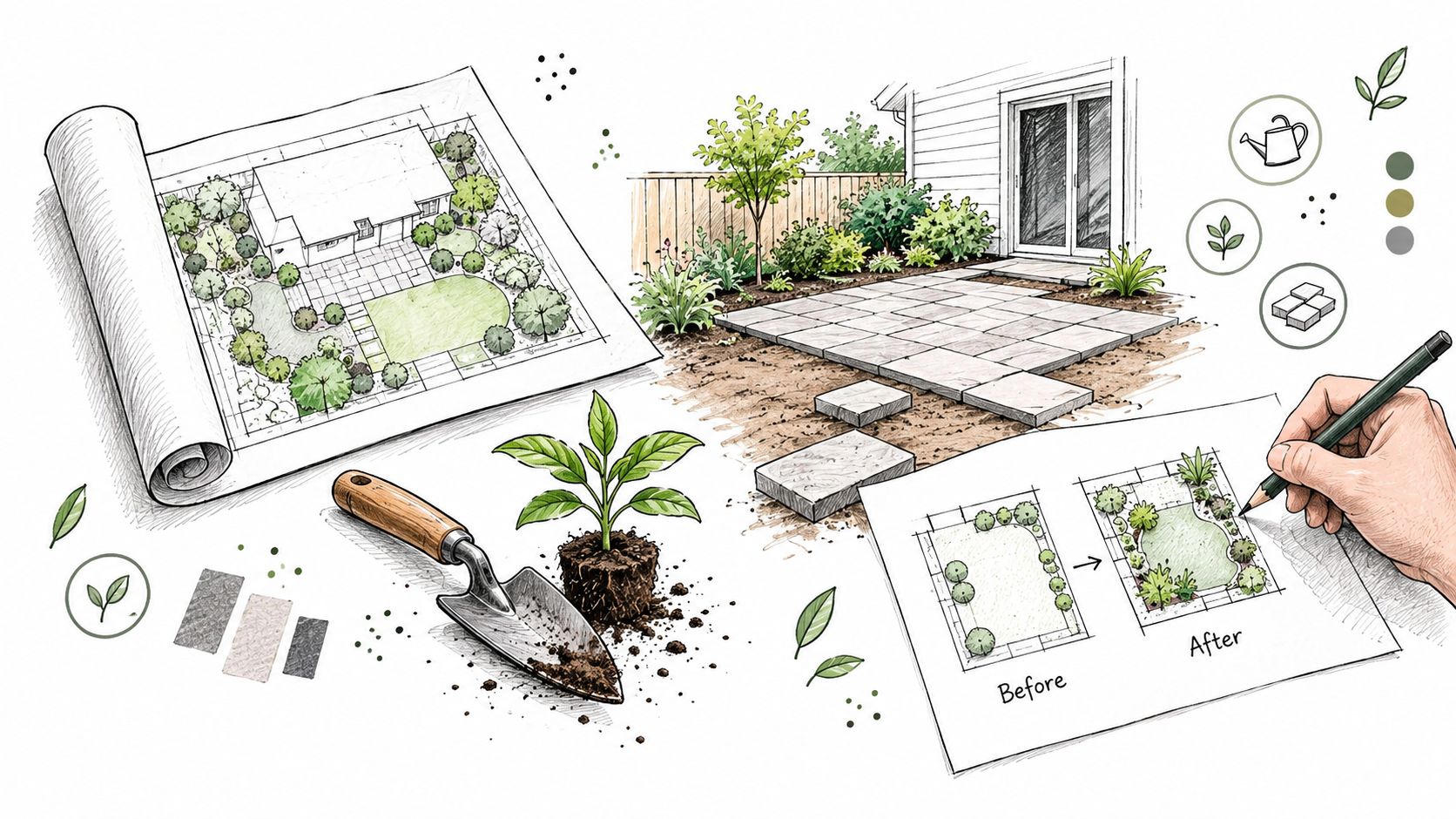
Start with an estimate that separates design, site preparation, plants, hardscape elements, delivery, installation, and cleanup. Include a drawing or visual reference when it helps the customer understand placement. A signed approval should identify the selected materials and clarify whether substitutions require written approval.
For project work, deposits protect cash flow. A deposit collected at signing can fund early purchasing and reserve the installation date, but the amount and refund terms should be stated in the contract. Later invoices can follow material delivery, a defined installation milestone, and completion. Don't begin a project on a verbal promise when your first major expense arrives before payment.
Use change orders instead of favors
If the client requests additional work, issue a revised estimate or change order before performing it. Describe the added scope, price, and effect on the schedule. A short mobile approval is better than a long text conversation that neither party can interpret later.
A project record should hold the approved estimate, signed agreement, deposit, design files, plant list, progress photographs, and final invoice. This matters when a client asks about a material months later or wants another phase. It also turns completed work into a usable portfolio.
Design and installation can feed recurring maintenance. Offer bed weeding, seasonal color replacement, pruning, mulch refresh, or irrigation checks after the installation, but don't hide those services inside the project price. The customer should know what keeps the new outdoor space healthy and what it costs to continue that care.
10. Hardscaping and Outdoor Features Installation
Hardscaping includes patios, paths, retaining walls, pergolas, decorative stonework, and other non-plant features. It can produce a larger project invoice than routine maintenance, but it also carries greater exposure to material costs, site conditions, drainage, structural requirements, and customer expectations.
A solo operator should sell only the hardscape work supported by the right skills, equipment, insurance, and local approvals. A small paver path may fit your operation. A retaining wall with significant grade, drainage, or structural demands may require a specialist or engineer. The most profitable job is not always the one with the largest quote. It's the one you can execute safely and collect on without absorbing unknown site costs.
Itemize the estimate:
- Site preparation: Excavation, demolition, grading, base preparation, and disposal.
- Materials: Pavers, stone, blocks, aggregate, edging, drainage components, and delivery.
- Labor: Installation, cutting, compaction, joint treatment, and cleanup.
- Schedule: Expected start conditions, weather delays, material lead times, and completion milestones.
- Payment: Deposit, progress invoices, approved changes, and final balance.
Use a signed contract before ordering materials. For large projects, milestone billing can align payment with the work completed. A deposit also reduces the risk of purchasing materials for a customer who later postpones the project. AurenWell's guide to how much to charge can support the broader pricing conversation, but your quote still needs to reflect the actual site and your operating costs.
Progress photographs help explain why an invoice is due at excavation, base preparation, or installation milestones. They also create a record if the customer later questions what was completed. A clear hardscaping offer doesn't promise a perfect timeline under every weather condition. It explains what you control, what can change, and how those changes will be approved.
Top 10 Landscaping Services Comparison
| Service | 🔄 Implementation Complexity | ⚡ Resource Requirements | ⭐ Expected outcomes / 📊 Impact | Ideal use cases | 💡 Key advantages |
|---|---|---|---|---|---|
| Lawn Maintenance & Mowing | Low, routine, repeatable | Basic: mower, trimmer, minimal materials | ⭐⭐⭐, predictable recurring revenue; 📊 steady cash flow | Residential weekly/bi‑weekly contracts | Low overhead, easy to price; great for solo operators |
| Landscape Maintenance Contracts & Property Management | Medium, bundled scopes require coordination | Crew, multi‑service tools, admin systems | ⭐⭐⭐⭐, high contract value; 📊 stable monthly income | HOA, commercial, multi‑property clients | Strong retention and higher ARPU; reduces churn |
| Seasonal Cleanup & Debris Removal | Low–Medium, episodic but intensive | Rakes, blowers, hauling vehicle, disposal fees | ⭐⭐, visible quick wins; 📊 seasonal revenue spikes | Spring/fall demand, upsell to existing clients | High client satisfaction; good upsell opportunities |
| Mulching & Bed Preparation | Low, short projects, seasonal | Mulch materials, wheelbarrows, labor | ⭐⭐, immediate curb appeal; 📊 moderate margin per job | Spring refreshes, add‑on to maintenance | High margin add‑on; quick completion |
| Trimming, Pruning & Tree Care | Medium, skill required; safety risk | Pruners, saws, poles, PPE, insurance | ⭐⭐⭐, improves plant health; 📊 recurring seasonal work | Shrubs, hedges, small trees for homeowners | Complements mowing, steady demand; premium for certified pros |
| Fertilization & Lawn Treatment Programs | Medium, regulated, scheduled applications | Chemicals, applicators, certification, recordkeeping | ⭐⭐⭐⭐, measurable lawn improvement; 📊 recurring (4–6/yr) | Customers wanting lawn health programs | High margins; builds loyalty with treatment plans |
| Garden Bed & Planting Design | Medium, horticultural skill + materials | Plants, soil amendments, planting tools | ⭐⭐, portfolioable one‑off projects; 📊 variable revenue | Homeowners seeking aesthetic upgrades | High‑value projects; showcase for portfolio |
| Landscape Consultations & Site Assessments | Low, expertise focused, brief delivery | Knowledge, time, reporting tools (low materials) | ⭐⭐, converts to larger projects; 📊 high margin per hour | Pre‑project planning, diagnosis, advisory | Low material cost, high margin; entry point for sales |
| Garden Design & Installation | High, design + installation coordination | Design tools, plants, labor crews, materials | ⭐⭐⭐, high per‑project revenue; 📊 significant margin potential | Custom residential projects, hardscape + plantings | Large project fees; strong upsell to maintenance |
| Hardscaping & Outdoor Features Installation | High, technical, permits, long timelines | Heavy equipment, materials, skilled labor, permits | ⭐⭐⭐⭐, premium pricing; 📊 substantial project revenue | Patios, retaining walls, pergolas, commercial installs | High margins, specialized skill reduces competition |
Turn Services Into a Profitable Offer Ladder
A strong landscaping service list doesn't require every service in this article. A solo operator usually gets better results by building an offer ladder that matches current equipment, skills, route density, insurance, and cash flow.
Start with one recurring maintenance offer. Lawn mowing can establish regular visits, but the service should include a precise scope rather than a vague promise to “take care of the yard.” Define mowing, edging, blowing, trimming, visit frequency, access expectations, weather policy, and exclusions. Use actual time records to determine whether the route price works after travel and administrative work.
Add one seasonal upsell that fits the same customer base. Seasonal cleanup and mulching are practical choices because they can use existing client relationships, equipment, and site knowledge. Sell them with separate estimates and line items. Include material purchasing, disposal, hauling, labor, and access conditions so the add-on doesn't become a low-margin favor.
Higher-value work should come later, when the business can support its risks. Consultations require time and clear deliverables. Planting and garden installation require purchasing control and aftercare expectations. Design and hardscaping require contracts, deposits, change-order discipline, and stronger project management. Tree care and treatment programs may require specialized insurance, certification, or local compliance. If you can't explain the scope and collect payment safely, the service doesn't belong on the menu yet.
The market supports this layered approach. U.S. landscaping industry reporting based on IBISWorld data places 2026 revenue at USD 176.7 billion across about 556,000 businesses, while another industry summary reports about 692,777 businesses and more than 1.4 million workers in 2025. IBISWorld's U.S. landscaping services industry page shows the scale and fragmentation of the sector. A solo business doesn't need to imitate a national provider. It needs a service mix that can be delivered consistently in a defined area.
Route design should influence your menu. Independent benchmarking indicates that reducing drive time can recover billable capacity without adding labor or overhead, so group clients by neighborhood and schedule seasonal work near existing stops. A case study on American Turf & Tree Care also reported revenue growth from USD 735,000 to more than USD 2.1 million while technician count fell from nine to eight after routing optimization, service bundling, and targeted digital marketing. The American Turf & Tree Care case study illustrates the operational point, not a guaranteed result for every operator. Better routing and packaging can create capacity, but execution still determines whether that capacity becomes profit.
Build each offer through the same practical workflow:
- Define the scope and exclusions: Write down what happens on a visit or project, what the customer must provide, and what requires a separate estimate.
- Choose the pricing basis: Use visit pricing for repeat maintenance, seasonal package pricing for defined cleanup, and project or milestone pricing for installation work.
- Get approval before labor or purchasing: Send an estimate with line items, expiration terms, assumptions, and payment requirements.
- Use an agreement for ongoing or risky work: Record frequency, cancellation, access, insurance, safety, weather, and change-order terms.
- Collect deposits where appropriate: Project materials and reserved dates shouldn't be financed entirely from your own cash.
- Document completion: Use photographs, time records, material receipts, and application records when the service requires them.
- Invoice promptly: Convert approved estimates into invoices and provide an online payment option.
- Automate repeat billing: Recurring invoices and polite overdue reminders can keep regular accounts from depending on memory.
AurenWell can support this administrative layer with estimates, contracts, invoices, online payments, recurring billing, time tracking, and expense records in one web app. It isn't a replacement for route planning, payroll, dispatch, double-entry accounting, licensing, or professional judgment. For a one-person landscaping business, its role is narrower and practical: connect the approved scope to the signed document, completed work, invoice, and payment record.
Choose the first offer you can quote accurately, schedule efficiently, deliver safely, and collect without chasing. Then add the next service only when it improves the route or customer relationship instead of creating a separate business inside your business. Build your menu this week, define the exclusions, prepare a reusable estimate, and send your first recurring or seasonal offer to existing clients.
Ready to turn your landscaping service list into paid work? Create your first service templates, define the scope and payment terms, and use AurenWell to send estimates, collect approvals, issue invoices, and set up recurring billing from one workflow.