
Your client is waiting at the property, but a sudden flood has blocked the access road. Or you're ready to start an online consultation when a ransomware incident takes down the platform you rely on. You haven't ignored the contract, and you may still be willing to perform. The problem is that an external event has interrupted the work.
That's where a force majeure clause can help, but it isn't a blanket excuse for missed appointments, higher costs, or ordinary business inconvenience. Its usefulness depends on the contract's exact triggers, the causal link between the event and nonperformance, timely notice, reasonable mitigation, and clearly stated consequences. Courts and legal practitioners generally treat these clauses as negotiated risk-allocation tools, not automatic cancellation rights, as explained in this overview of force majeure's legal development and commercial use.
The eight force majeure clauses examples below adapt common patterns for solo service providers. Each one includes a sample starting point, a practical scenario, proof and notice considerations, and a customization tactic. Treat the wording as a drafting prompt, not legal advice. Have a qualified lawyer review any clause before you use it, especially because enforceability varies by jurisdiction and contract language.
1. Acts of God Clause
A flood has blocked the only road to a client's property, and the service cannot be performed safely. That fact is more useful than a clause that merely lists earthquakes, storms, and other disasters. The contract should connect the event to the work, explain what evidence supports the claim, and set out what happens to the appointment.
A practical starting point could read:
Sample wording: “Neither party will be liable for delay or failure to perform a service to the extent caused by an extraordinary natural event beyond that party's reasonable control, including an earthquake, flood, hurricane, tornado, or severe weather that makes performance unsafe or physically impossible. The affected party must notify the other party promptly, provide reasonable supporting information, and use reasonable efforts to resume or reschedule the service.”
This draft addresses events, causation, proof, notice, and mitigation. It does not automatically excuse longer travel, higher fuel costs, or a provider's general concern about poor conditions. The effect may also depend on whether the clause says an event must prevent, hinder, or delay performance, and on whether reasonable work-arounds are available, as discussed in this analysis of modern force majeure drafting.
Make the trigger observable
A pressure washer may need to stop after a hurricane warning leaves the property unsafe. An outdoor fitness instructor may cancel during severe thunderstorms. A photographer may need to move a shoot when flooding blocks the venue. A handyman should record why earthquake-damaged roads prevented access, rather than describing the issue only as inconvenience.
Customize the clause around what makes the work unsafe or impossible. If you use weather thresholds, tie them to the service and local conditions instead of copying a generic figure. Save photos, official weather records, access notices, and client communications with the signed agreement in AurenWell. Its documentation workflow can organize the notice and evidence trail, but it does not replace legal review. State whether the client receives a rescheduled date, a credit, or another contractual remedy, and promise only an outcome you can provide.
2. Pandemic and Disease Outbreak Clause
A solo yoga instructor may have a studio closed by public-health authorities the morning before a class. A tutor's client may lose access to a workplace, while a massage therapist may face a temporary prohibition on providing treatment. Each situation raises different questions about whether the service is prevented, whether an alternative is practical, and what happens to the client's payment.
A focused provision might say:
Sample wording: “A declared public health emergency, government restriction, facility closure, or health authority order that directly prevents the agreed in-person service may delay or suspend performance. The provider will notify the client within a reasonable time and will offer an available alternative, such as rescheduling or a remote service where the agreed scope permits. The parties will apply the payment and credit terms stated in this agreement.”
The trigger should identify an external restriction or direct operational barrier, not a general fear of illness or reduced demand. A tutor may offer online lessons if the learning outcome remains substantially the same. A personal trainer may reschedule when the client's building is closed. A massage therapist may need to pause entirely if the relevant authority prohibits the treatment. The clause should state whether the provider must prove the restriction, how notice is delivered, and whether reasonable alternatives must be offered.
Set payment and documentation rules
Specify what happens to deposits, prepaid sessions, and recurring appointments. Choose a workable result, such as a replacement date, a service credit, or a refund when the service cannot resume under the agreed process. A solo provider should avoid promising unlimited rescheduling or refunds that could create a cash-flow problem.
Keep the signed agreement, applicable public notices, client messages, and the date of each proposed alternative together. AurenWell can organize signed contracts, version history, notices, and client notes as a documentation workflow. It does not replace legal review. If official guidance changes, issue a new contract version rather than silently editing an agreement already signed.
Pandemic clauses vary in scope and effect. A contract study and its discussion of force majeure wording illustrates why trigger language, carve-outs, and notice duties require deliberate drafting. Have local counsel review the final wording, especially where consumer-protection rules may affect credits, cancellations, or refunds.
3. Government Action and Regulatory Intervention Clause
A solo provider can be ready, equipped, and willing to work, yet a government order can stop the service. A venue may close, an inspection authority may halt construction, or a regulator may prohibit a product. The clause should exclude restrictions caused by the provider's own breach, expired licence, or negligence.
Sample wording: “A party will not be responsible for delay or nonperformance directly caused by a government order, permit denial, licensing suspension, property seizure, or regulatory prohibition arising after the agreement date, provided the event was not caused by that party's breach, violation, or negligence. The affected party must give prompt notice, provide reasonable evidence of the action, and resume performance when lawful and reasonably practicable.”
A pressure washer may be barred from using a chemical after an environmental rule changes. A photographer may lose access to a venue after an official closure notice. A handyman may have to pause while an inspection order stops the project. Each example connects the external action to the missed service. A rule that only adds paperwork or expense may not justify nonperformance.
Define the operational response
Separate a compliance burden from a legal prohibition. State whether the clause covers slower work, a delayed appointment, or only work that cannot lawfully proceed. Require notice through an agreed channel, identify the evidence needed, and set a deadline for proposing a new date. If the service cannot resume, specify whether the client receives a service credit, refund, or termination right.
Address deposits, prepaid sessions, and recurring appointments directly. A personal trainer might offer a replacement session when a client's building closes, while a treatment provider may need to pause until the authority permits the service. Avoid promising unlimited rescheduling or automatic refunds without considering cash flow and applicable consumer rules.
Exclude rules and licensing conditions that existed before signing, unless you intend to accept that risk. Keep the order, public notice, client messages, and proposed dates with the signed agreement. AurenWell's contracts workflow can organize those records and contract versions, but it does not determine whether the action legally activates the clause. Have local counsel review the wording before use.
4. Supply Chain Disruption and Material Unavailability Clause
A handyman arrives for a scheduled repair and learns that the specified fixture is unavailable after the supplier's failure. A photographer finds that a required lens cannot be rented locally. These facts may support a force majeure claim only when the shortage results from an external disruption and the provider can show reasonable preparation.
A usable draft might state:
Sample wording: “The provider may delay the affected service where a material, equipment item, or third-party service required for the agreed scope becomes unavailable after signing because of an external supplier, transportation, manufacturing, or market disruption beyond the provider's reasonable control. The provider must notify the client, document reasonable efforts to obtain an alternative, and propose a substitute, revised scope, or new service date where practicable.”
The trigger should connect the shortage to the missed work. Ordinary lead times, last-minute ordering, or reliance on one vendor without checking alternatives may weaken the argument. A provider should also identify whether the client must approve a substitution, whether the price changes, and whether a deposit remains applied to the rescheduled service.
Tie the clause to the estimate
List important materials, brands, file formats, and software dependencies in the estimate or service agreement. State whether the provider may select a reasonably equivalent substitute or needs written client approval. Define who pays any additional cost and what happens if no workable alternative exists.
A designer blocked by discontinued software should check whether existing files can be opened or delivered through another tool. A handyman may have a stronger position when the specified material is unavailable than when the provider prefers a cheaper substitute. A photographer should record why comparable rental or replacement options were not reasonably workable.
The Rutgers discussion of sample force majeure clauses illustrates why defined events, causation, and negotiated carve-outs matter. Keep supplier emails, stock notices, alternative quotes, and outreach attempts with the client record. Document any approved substitution before work continues. AurenWell can support that documentation workflow, while legal review remains necessary for jurisdiction-specific wording. Documented sourcing efforts strengthen the clause; last-minute ordering weakens it.
5. Utility Failure and Infrastructure Breakdown Clause
An outage may stop one service while leaving another largely unaffected. An online tutor may lose the live lesson, while a designer can keep working offline. A pressure washer may need running water at the property, whereas a consultant could switch from video to telephone. The clause should connect relief to the actual contracted result, not to any technical inconvenience.
Sample wording: “The provider may delay or suspend the affected service when an interruption or failure of electricity, water, internet, telecommunications, hosting, or other third-party infrastructure directly prevents performance or makes it unsafe. The provider will notify the client promptly, take reasonable steps to use an available alternative, and reschedule, complete, or refund the affected service as required by this agreement.”
Set the trigger and response
Define what counts as a material interruption for the service. A cloud-storage failure may block delivery of a finished video, but it may not excuse editing if local copies remain available. A backup connection may let an online tutor continue, while a pressure washer may need a new date after water service returns. State whether the client must approve a substitute channel, whether partial work remains payable, and how prepaid amounts apply to rescheduling.
The provider should also address safety. A field service may be postponed when a utility failure creates unsafe conditions, while a remote service may continue through another connection. If no workable alternative exists, specify whether the parties reschedule, provide a credit, or refund the blocked portion. These choices should match the estimate and service agreement rather than relying on a broad excuse.
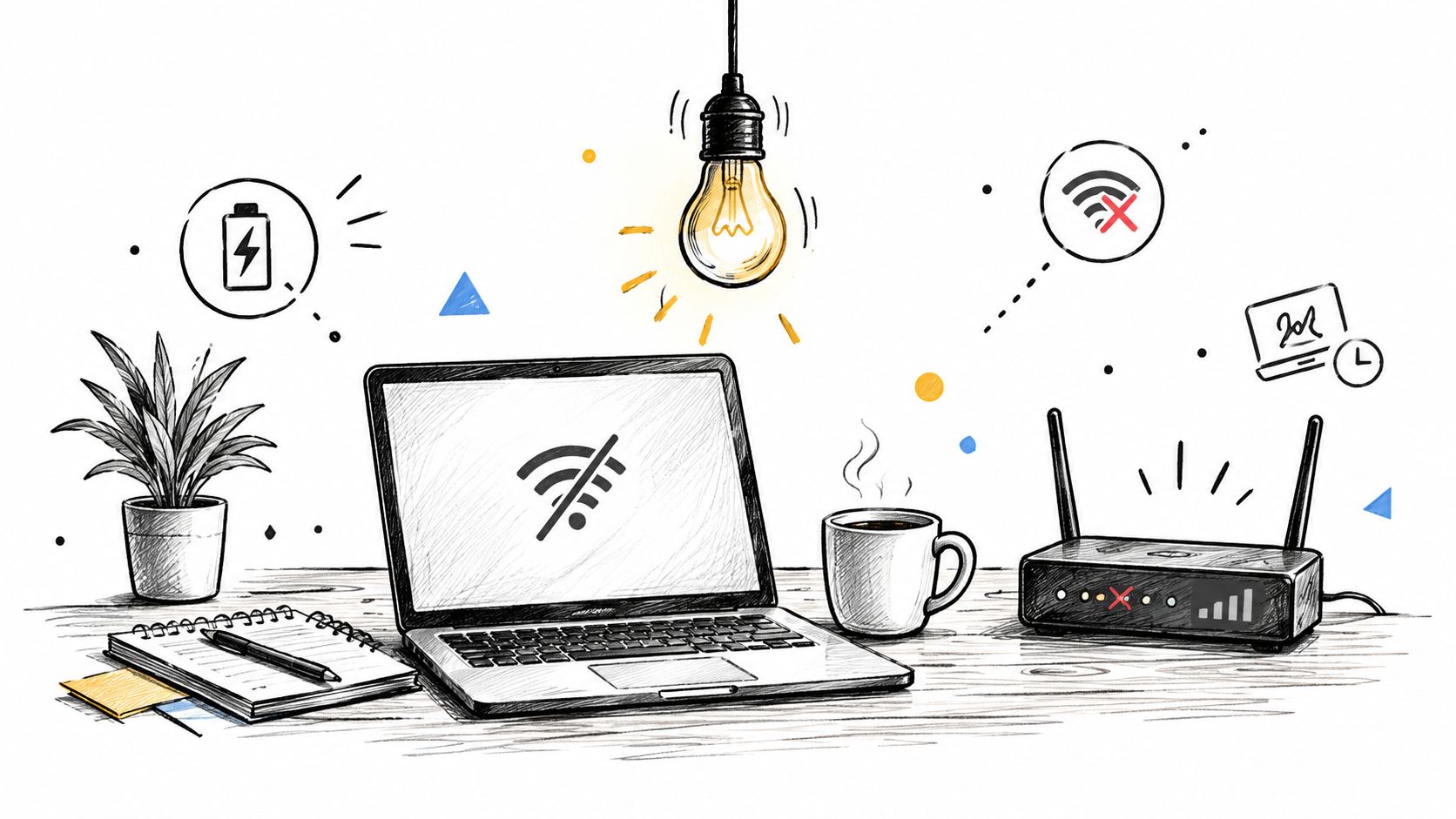
Keep the outage notice, detection time, client notification, attempted workaround, and alternative offered. Add a phone number or secondary email so notice does not depend on the failed system. AurenWell can organize those records as a documentation workflow, but it does not replace legal review of jurisdiction-specific wording. Excusing only the blocked portion usually produces a clearer result than suspending the entire relationship.
6. Labor Unavailability and Key Personnel Clause
For a solo provider, the person may be the service. A sudden injury, acute illness, or urgent family emergency can prevent safe performance, but the clause should distinguish genuine incapacity from ordinary scheduling problems, foreseeable leave, or a known procedure that could have been planned before signing.
Sample wording: “The provider may postpone the affected service when sudden illness, accidental injury, or an urgent family emergency makes the provider unable to perform safely. The provider will notify the client as soon as reasonably practicable, protect any prepaid amounts, and offer rescheduling, credit, or refund options under this agreement.”
A personal trainer facing unexpected surgery may need to cancel sessions. A photographer dealing with an immediate family medical emergency may need to move a shoot. An acutely ill tutor may be unable to teach, while a consultant handling a child emergency may need to postpone a meeting. In each case, define the trigger, the notice method, and the client's payment remedy.
Customize the clause to the work. A mobile cleaner could offer a replacement date or approved substitute, while a photographer may need to reschedule around venue availability. State whether the provider must seek a substitute, whether the client may refuse one, and whether completed work remains payable. For recurring services, specify whether future invoices pause, whether unused prepaid sessions become credits, and when the client may terminate if the provider cannot return within the agreed period.
Protect privacy and payment rights
Do not make detailed medical records a routine condition of relief. Request reasonable confirmation only if a genuine dispute requires it, and keep sensitive information out of ordinary client notes. A documentation workflow should record the incident, notice time, proposed remedy, and payment outcome without collecting unnecessary health details.
Guidance on cleaning services contracts illustrates scheduling and cancellation mechanics. AurenWell can organize those records, but it does not replace legal review of jurisdiction-specific wording or the clause's fit with the actual service.
7. Third-Party Action and Strike Clause
A studio strike can leave a fitness instructor ready to teach but unable to enter the room. A venue may close, a contractor may halt a project, or building staff may restrict access. Your clause should connect relief to a third party's action that directly blocks the agreed service, not to a general inconvenience.
Sample wording: “The provider may delay or suspend the affected service when a strike, lockout, labor dispute, contractor stoppage, venue closure, or comparable third-party action prevents safe or lawful access or coordination required for performance. The provider must notify the client, take reasonable steps to identify an alternative method or date, and resume performance when the obstruction ends.”
Customize the list to your work. A handyman may depend on an electrician completing related work. A photographer may need access to a venue. A designer may require entry to a building affected by a construction dispute. State whether remote delivery, another location, or a replacement date is workable. If a substitute provider could perform, explain whether you must seek one and whether the client may refuse that substitute.
Keep proof that you were ready to perform. Save the venue notice, contractor message, public strike statement, access restriction, and your client communications. Record when you received notice, what service was blocked, the alternative offered, and the effect on payment. AurenWell can organize this timeline and supporting documentation, but it does not replace legal review of jurisdiction-specific wording.
Define the payment and exit rules
Separate a complete stoppage from slower coordination or reduced access. A strike affecting the client's wider operations may not excuse your work if you can still deliver the contracted service. For recurring work, state whether the affected appointment moves, whether a prepaid amount becomes a credit, and whether completed work remains payable. Set a deadline for rescheduling and explain when either party may terminate if access does not return.
Labor disputes, riots, and civil disturbances commonly appear in force majeure analysis, but enforceability depends on the wording and the causal link to nonperformance, as shown in this discussion of force majeure disputes involving protests and cargo delays.
8. Cyber Attack and Data Infrastructure Disruption Clause
A cyber event can stop a digital service even when your own devices are secure. An online tutor may lose access to a teaching platform, a designer may be locked out of cloud files, or a photographer may be unable to deliver finished images because a backup provider is investigating an attack. The clause should address both malicious incidents and critical platform failures without excusing weak security practices or user error.
A useful starting point might say:
Sample wording: “The provider may delay or suspend the affected digital service when a malicious cyber attack, ransomware incident, security shutdown, or critical failure of a third-party platform directly prevents access to systems or data required for delivery. The provider must notify the client, take reasonable recovery and security steps, and use an available alternative method where practicable.”
Pair relief with recovery duties
A narrow definition matters. A provider shouldn't invoke force majeure because of a preventable password mistake, unsupported software, or negligent failure to maintain ordinary backups. At the same time, a documented ransomware incident at a hosting or video platform may make the contracted delivery impossible for a period.
An online tutor might move a class to another platform. A consultant might send documents through a secure alternative channel. A photographer may need to rebuild delivery access before releasing digital files. Document the incident through the platform's notice, security provider communication, or incident report. Keep client contact details and essential agreement information available through a separate channel.
AurenWell can provide a place to organize contracts and client records, while its security and data information should be reviewed alongside your own backup and access policies. For broader risk planning, consider business cyber protection from Copeland. Insurance doesn't replace a well-drafted clause, and a clause doesn't replace sensible security controls.
8 Force Majeure Clause Examples Compared
| Clause | Implementation Complexity 🔄 | Resource Requirements ⚡ | Expected Outcomes 📊 | Ideal Use Cases ⭐ | Key Advantages 💡 |
|---|---|---|---|---|---|
| Acts of God | Low–Medium: Define covered events, thresholds, notice, and rescheduling terms | Weather records, client notices, signed contracts | Excused performance during qualifying natural disasters | Outdoor services, photography, property access, weather-dependent work | Broad recognition; reduces liability for genuinely uncontrollable natural events |
| Pandemic and Disease Outbreak | Medium–High: Specify health triggers, government restrictions, alternatives, and credits | Official health orders, contract updates, communication records | Suspension, rescheduling, or alternative service delivery during health emergencies | In-home services, fitness, tutoring, massage, studio-based work | Addresses public-health restrictions and supports flexible service alternatives |
| Government Action and Regulatory Intervention | Medium: Define covered orders and exclude provider violations or known requirements | Government notices, licenses, permits, compliance records | Relief when legal or regulatory action makes performance impossible | Regulated trades, fitness, tax consulting, construction, venue-based work | Protects against unforeseen government restrictions and regulatory changes |
| Supply Chain Disruption and Material Unavailability | Medium: Establish sourcing duties, alternatives, evidence, and delay limits | Supplier correspondence, quotes, material records, timeline tracking | Reasonable delay or rescheduling when essential supplies are unavailable | Handymen, installers, designers, photographers, videographers | Covers supplier failures while encouraging good-faith alternative sourcing |
| Utility Failure and Infrastructure Breakdown | Low–Medium: Set outage durations, notice rules, and backup options | Utility reports, outage records, backup tools, client communications | Excused or rescheduled services during extended outages or access failures | Online services, digital work, pressure washing, HVAC, site-based trades | Clearly addresses power, water, internet, transport, and infrastructure failures |
| Labor Unavailability and Key Personnel | Medium: Define emergencies, notice periods, documentation, and return timelines | Health or emergency records, client notices, rescheduling plans | Protected deferral or rescheduling when essential personnel cannot work | Solo providers, personal trainers, tutors, photographers, consultants | Recognizes that the provider is often the core business resource |
| Third-Party Action and Strike | Medium: Identify covered parties, evidence requirements, and delay limits | Strike notices, third-party communications, activity logs | Relief from delays caused by strikes, lockouts, or coordination failures | Subcontractors, venue-based services, construction, coordinated trades | Shifts responsibility for external labor disputes and interference |
| Cyber Attack and Data Infrastructure Disruption | High: Define incidents, exclusions, recovery duties, backups, and security evidence | Incident reports, backup systems, alternative platforms, cyber insurance records | Temporary suspension or alternate delivery during cyber incidents | Online tutoring, consulting, design, virtual fitness, digital media | Addresses modern technology risks while supporting recovery and continuity |
Turn a Broad Excuse Into a Usable Contract Process
The examples work because they connect an external event to a defined service failure. A list of disasters, outages, strikes, or cyber attacks is only the beginning. Your contract must explain what qualifies, what you must prove, when you must notify the client, what mitigation is required, and what happens to the money and the appointment.
Start with the event itself. Name the categories that affect your work, including natural events, public restrictions, supplier failures, infrastructure outages, third-party stoppages, or cyber incidents. Avoid an unlimited catchall such as “anything beyond our control” unless your lawyer recommends it and the surrounding language gives it a workable meaning. Contract practice shows that courts often focus on exact wording, enumerated events, notice requirements, and whether the event directly caused the failure.
Then define the causal link. Ask, “What could I not do, and why did this event stop me?” A flooded access road is different from expensive travel. A closed venue is different from a difficult booking. A platform attack blocking delivery is different from a forgotten password. If you can complete part of the work, your clause should address partial performance instead of claiming a total excuse.
Exclude preventable conditions and pre-existing problems. A provider shouldn't rely on a government-action clause for an expired license or a supply clause for an order placed too late. A labor clause shouldn't cover ordinary disagreement with a subcontractor. A cyber clause shouldn't excuse negligence. These boundaries make the provision easier to apply and more credible in a dispute.
Set a notice rule that a solo operator can follow. Identify the communication channel, the information required, and the point at which notice is due. Keep evidence proportional to the risk. Weather records, closure orders, supplier messages, outage reports, strike notices, and platform incident reports can support the account. Don't collect sensitive medical information unnecessarily.
Define mitigation and the commercial outcome
Mitigation should be practical, not unlimited. A remote session, substitute material, alternative platform, new appointment, or partial delivery may reduce the impact. But the contract should also say who approves a substitute and whether extra costs require written agreement.
Payment deserves equal attention. State whether completed work remains payable, whether a deposit transfers to a new date, and whether the client receives a credit, refund, or termination right if performance can't resume. Force majeure usually addresses delay or suspension, not an automatic release from every payment obligation. Preserve accrued rights in clear language rather than leaving the issue to assumption.
Finally, turn the clause into a recordkeeping routine. Store the signed agreement, version history, notices, supporting evidence, and rescheduling decision together. AurenWell's contracts, estimates, invoices, payments, and client records can support that administrative workflow, but the platform isn't a substitute for legal review or jurisdiction-specific drafting. Enforceability varies with the contract, the event, the governing law, and the facts.
Review each clause with a qualified lawyer before adopting it. Then build a simple response habit: identify the event, notify the client, document the cause, attempt a reasonable alternative, record the agreed outcome, and update the invoice or schedule. If you want to reduce the administrative gap between a signed service agreement and a documented disruption, explore AurenWell and organize your contracts and client records before the next missed appointment becomes a contract problem.
Book a jurisdiction-specific contract review, then create a written force majeure process for your business. Identify your likely triggers, gather the evidence each one would produce, and decide in advance whether you'll reschedule, credit, refund, or terminate affected work. After that, set up your agreements and client records in AurenWell so the next disruption is handled with clear notice and documented follow-through.