
An invoice is past due, but you don't know whether the client missed it, needs more time, or is unhappy with the work. Send an aggressive note and you could damage a valuable relationship. Wait too long and the delay starts affecting your cash flow. The right due date reminder message depends on the payment stage, client history, invoice value, and channel you're using.
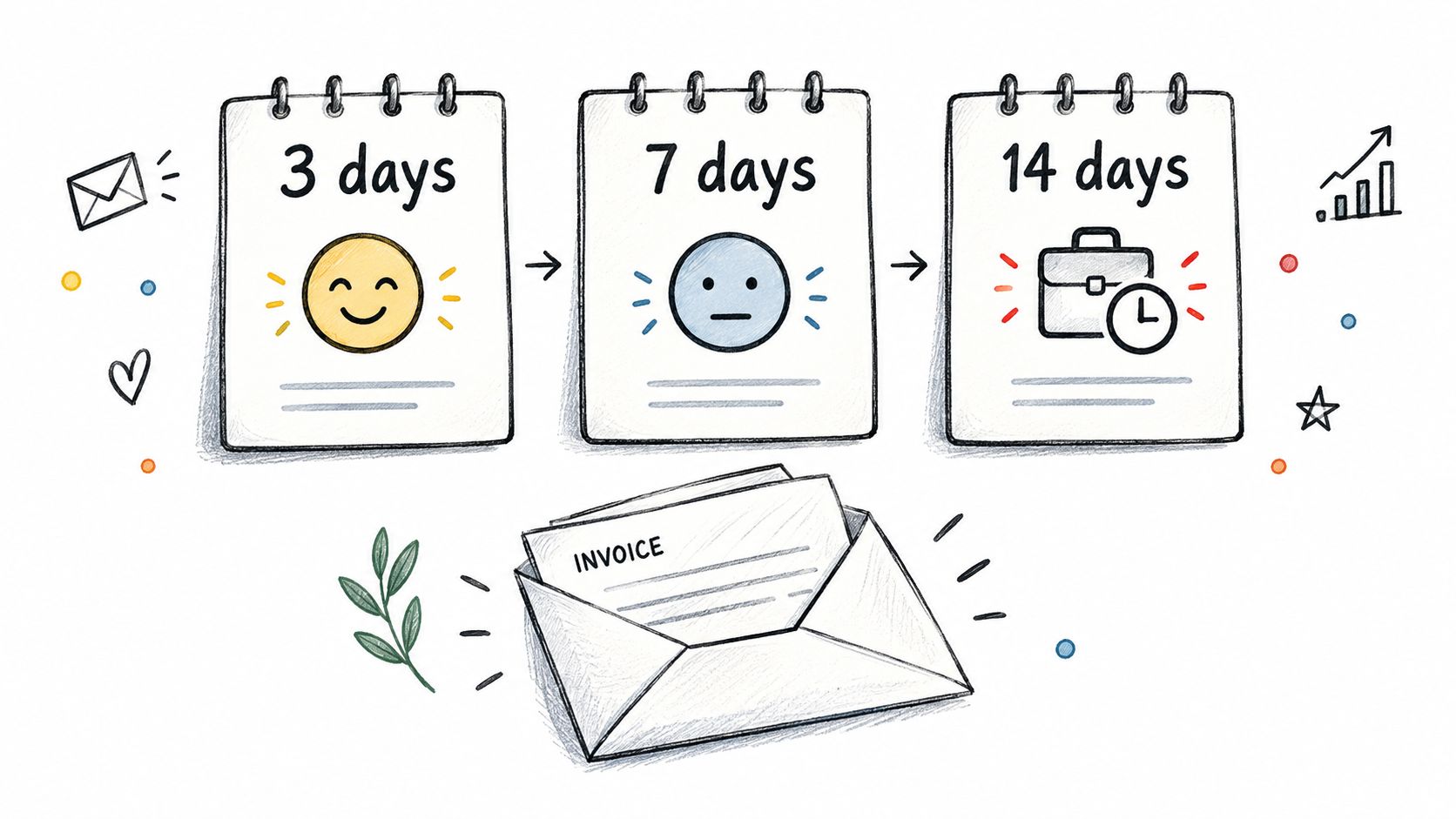
A practical starting point is a 3-, 7-, and 14-day framework after the due date. Use friendly language first, become more direct when the delay continues, and reserve legal-toned wording for defined thresholds and genuine exceptions. You can also shorten a full email into an invoice note or SMS by keeping the invoice number, amount, due date, payment link, and reply path.
AurenWell can help solo operators keep invoices, payment links, activity logs, recurring billing, and reminders in one workflow. No template guarantees faster payment, but a clear sequence makes it easier for clients to understand what's due and how to pay. For failed or declined payments, see this dunning email guide that recovers failed payments.
1. The Polite Progressive Reminder Series
A three-touch sequence works well when the client may have overlooked the invoice. Send the first note three days after the due date, keep it light at seven days, and become firmer at fourteen days. The structure stays consistent while the tone changes.
Practical rule: Escalate the clarity before you escalate the emotion.
At the first checkpoint, avoid words such as “overdue” if the relationship is new or the delay may be administrative. Try:
Email:
Subject: Quick check on invoice [invoice number]
Hi [name], I'm checking that invoice [invoice number] for [amount] reached you. It was due on [date]. You can pay securely using [payment link], or reply if you need me to resend the invoice.
At seven days, name the delay plainly:
Invoice note:
Invoice [invoice number] for [amount] is still outstanding. Please arrange payment using [link], or let me know if there's an issue with the invoice.
At fourteen days, state the next step without making a threat:
SMS:
Hi [name], invoice [invoice number] for [amount] remains unpaid after its [date] due date. Please pay via [link] or reply today if you need to discuss the balance.
The sequence is useful for pressure washing businesses following up on seasonal jobs, handymen managing several projects, and personal trainers billing monthly sessions. Customize the wording to your voice, but keep the practical details stable. A direct payment link reduces the effort required at the moment the client decides to act.
AurenWell's payment reminder workflow can help you keep reminder activity attached to the unpaid invoice. Review activity logs for patterns, such as clients who view an invoice but don't pay, and adjust future timing for repeat customers.
2. The Urgency-Tiered Template
Some invoices need a tone decision before they need a message. A contractor enforcing agreed payment terms shouldn't use the same wording as a photographer waiting for a retainer before delivering final files. Define your internal stages first, then draft each version so the change in urgency feels deliberate rather than emotional.
For the first week, use conversational language:
Subject: Invoice [invoice number] due for payment
Hi [name], I wanted to check that you have invoice [invoice number] for [amount], due on [date]. Here's the payment link: [link]. Please reply if anything needs correcting.
From the second week, move to direct language:
Subject: Payment requested for invoice [invoice number]
Hi [name], invoice [invoice number] for [amount] is now overdue. Please arrange payment using [link]. If there's a problem with the invoice or payment timing, contact me at [phone number] so we can resolve it.
For a longer delay, use formal wording only when your agreement supports the next step:
Subject: Formal payment notice for invoice [invoice number]
Dear [name], payment of [amount] for invoice [invoice number], due on [date], remains outstanding. Please make payment through [link] or contact me at [phone number] to discuss the account. If payment has already been sent, please disregard this message and forward the payment details.
This approach suits contractors working under Net-30 terms, virtual consultants requiring upfront payment, and photographers waiting for a retainer before delivering a finished package. Don't label a message “final notice” unless you're prepared to follow the process described in your agreement.
The firmest version should include a phone number or another real reply path. A formal message that gives the client no way to explain a bank delay, disputed line item, or missing purchase-order detail often creates more friction instead of resolving it.
3. The Payment Method Reminder
Sometimes the client agrees with the invoice but hasn't paid because the available method doesn't fit their routine. A payment-method reminder removes that uncertainty. Put the easiest option first, then mention alternatives without turning the email into a catalog.
Email:
Subject: Easy ways to pay invoice [invoice number]
Hi [name], invoice [invoice number] for [amount] was due on [date]. You can pay by card or ACH using this secure link: [link]. If you prefer cash, check, or bank transfer, reply and I'll send the details. Please let me know if you have any trouble opening the payment page.
A yoga instructor might place a QR code beside the class-package invoice. A handyman could list card, check, and bank transfer. A music teacher may use one payment link for lesson renewals while keeping a phone option available for clients who aren't comfortable with online checkout.
Lead with a specific action, not a vague promise:
- Start with the fastest route: “Pay securely using this link: [link].”
- Explain the alternative: “If card payment isn't convenient, reply for bank-transfer details.”
- Keep the choices useful: Offer only methods you monitor and record.
- Check the customer experience: Open the link on a phone and confirm that the amount and invoice reference are clear.
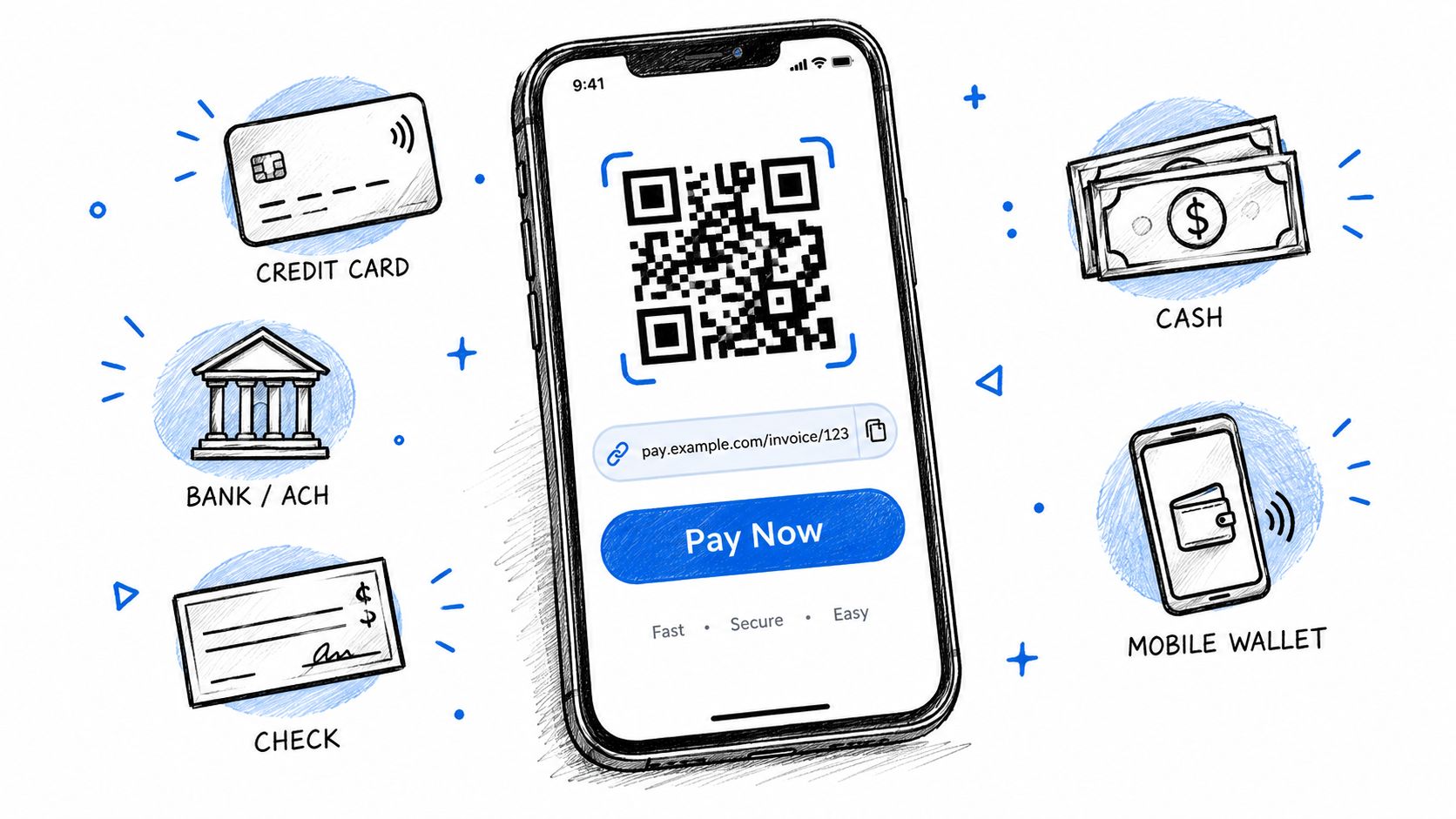
AurenWell's online payment feature supports payment links and QR codes, while manual payments can still be recorded when a client pays by cash, check, or bank transfer. That matters because a reminder should make payment easier without forcing every client into the same method.
For an SMS, shorten the message to one action:
SMS:
Invoice [invoice number] for [amount] is overdue. Pay by card or ACH here: [link]. Reply if you need another payment option.
A short payment explainer can also help your clients understand why a failed or incomplete checkout needs attention:
4. The Relationship-First Reminder
A relationship-first message is the right choice when the client is valuable, the work was collaborative, or the delay may reflect a minor administrative problem. It opens with the project rather than the debt, but it still states the amount and due date clearly.
Use it for a wedding photographer checking on final payment, a personal trainer billing a committed client, a designer closing out a completed project, or a tutor following up after a successful run of sessions. The message should sound personal, not evasive.
Email:
Subject: Checking in on [project name] and invoice [invoice number]
Hi [name], I enjoyed working with you on [project detail], and I hope everything is working well on your side. I'm checking in because invoice [invoice number] for [amount] was due on [date]. You can settle it here: [payment link]. If there's anything you'd like to discuss, including a payment arrangement, reply and I'll do my best to help.
The opening should refer to a real detail. “Thanks for your business” is polite but generic. “I hope the finished gallery is working well for your launch” gives the client a reason to recognize the project and the conversation.
Keep the warmth from obscuring the request. Include the invoice number, exact amount, due date, and payment link in the first screen of the email. If you leave the payment request until the final paragraph, the client may finish reading without knowing what action you want.
This approach works best with repeat clients or high-value projects. If the client doesn't respond, switch to the progressive cadence rather than sending increasingly sentimental reminders. Gratitude can preserve goodwill, but it can't replace a clear collection process.
For an invoice note, use:
Invoice note:
Thanks again for [project]. Invoice [invoice number] for [amount] was due on [date]. Please pay here: [link], or reply if you need to discuss timing.
5. The Value Reinforcement Reminder
A client is more likely to engage with an invoice when the message reconnects the payment to the result they hired you to create. This isn't a reason to oversell completed work. It's a prompt to restate the agreed value in language that matches the project.
A consultant might refer to the recommendations delivered. A pressure washing provider could mention the completed exterior cleanup. An IT support professional may point to the maintenance work that keeps systems protected. A marketing coach can remind the client which deliverables or decisions the engagement covered.
Email:
Subject: Invoice [invoice number] for [project result]
Hi [name], I'm following up on invoice [invoice number] for [amount], due on [date]. This invoice covers [specific work delivered], including [deliverable or outcome]. You can complete payment here: [link]. Please reply if you have a question about the work or the invoice.
Use evidence you can support. If you tracked hours, name the completed work. If you delivered a before-and-after result, link to it. If the benefit will appear over time, describe it as ongoing support or prevention rather than promising an immediate return.
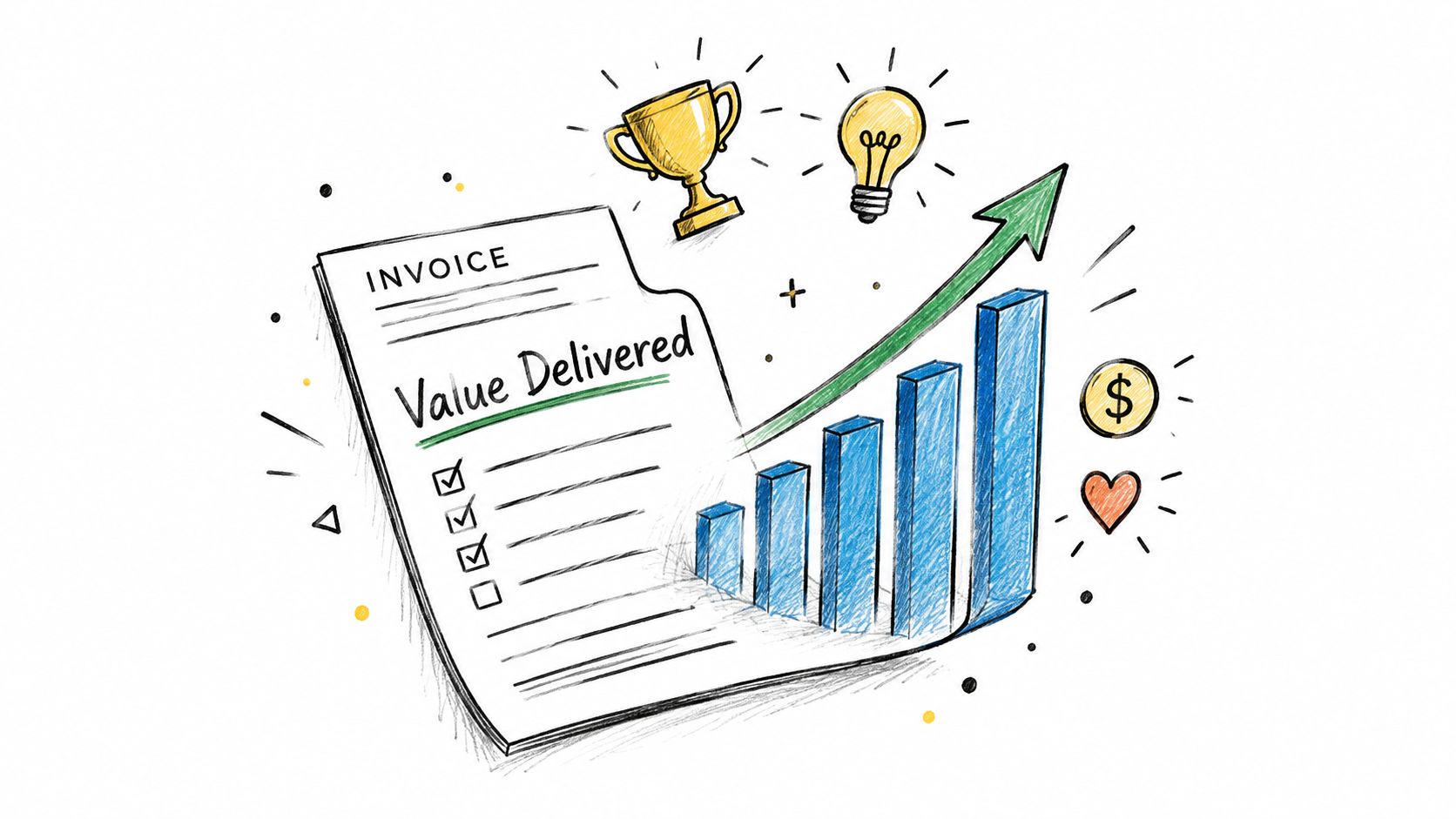
Avoid inserting new claims that weren't part of the engagement. “This generated huge growth” sounds promotional unless you can demonstrate it. “This invoice covers the campaign review, reporting, and recommendations we agreed to deliver” is specific and defensible.
A useful value statement has three parts:
- Name the work: Identify the service or deliverable.
- Connect it to the client's goal: Use the language from the proposal or project discussion.
- Ask for payment directly: Put the link and due date beside the reminder.
This format often works best as an early follow-up, before the conversation becomes adversarial. If the client disputes the value, stop sending automated nudges and address the work or scope question directly.
6. The Recurring Invoice Lifecycle Reminder
Recurring billing needs a different message because the client isn't deciding whether a completed one-off project deserves payment. They're preparing for another charge, renewal, or scheduled invoice. A brief notice before processing gives them a chance to update payment details, pause the service, or raise a question before the charge becomes a dispute.
A personal trainer can confirm a monthly membership renewal. A yoga instructor can remind members about an unlimited-class subscription. A consultant can confirm a retainer invoice, while a lawn-care provider can notify clients about the next seasonal service charge.
Email:
Subject: Upcoming invoice for [service]
Hi [name], your next [service] invoice for [amount] is scheduled for [billing date]. Payment will be processed using [payment method]. Review or update your billing details here: [link]. Reply if you'd like to pause, change, or discuss the service before the next charge.
The message should be shorter than an overdue reminder. It doesn't need a long explanation of the relationship or a warning about consequences. It needs the service name, billing date, amount, payment method, and a direct route to make changes.
For an SMS:
SMS:
Your next [service] payment of [amount] is scheduled for [date]. Review billing details here: [link]. Reply if you need help.
AurenWell's recurring invoice tools are relevant when you want recurring schedules and client records in the same workflow. Use the notice to spot early warning signals. A cancellation request, repeated payment-method change, or question about the service may indicate dissatisfaction that deserves a personal response.
Test the timing against your clients' habits. Sending the message too early may make it easy to forget, while sending it too late leaves no practical time to correct billing details. Also include a clear pause or modification route. A client who can't find that option may dispute the charge instead.
7. The Multi-Channel Escalation Template
Email is efficient, but it isn't always the right channel for a high-value invoice or a client who never responds. A multi-channel approach starts with a written record, adds a phone call when the delay continues, and uses SMS only when the client has agreed to receive business messages that way.
The phone call shouldn't begin as a collection threat. Start by checking whether the work, invoice, or payment process caused the problem:
Call opening:
“Hi [name], I'm calling about invoice [invoice number]. I noticed it's still open, and I wanted to check whether everything was clear with the invoice and the work.”
Listen before repeating the balance. The client may have a missing purchase-order reference, an incorrect billing address, or a concern about the project. Record the issue and agree on a specific next step. Then send a written summary:
Follow-up email:
Subject: Follow-up on our call about invoice [invoice number]
Hi [name], thanks for speaking with me. As discussed, invoice [invoice number] for [amount] remains outstanding from [date]. The next step is [agreed action]. Please pay using [link], or reply if the agreed arrangement changes.
If email and phone fail, an SMS can be brief:
SMS:
Hi [name], I'm following up on invoice [invoice number] for [amount]. Please use [link] or call [phone number] today so we can resolve the outstanding payment.
Reserve this process for invoices where the personal contact is justified, such as a substantial renovation invoice, a major consulting engagement, or a high-value wedding package. Don't invent a monetary threshold that doesn't fit your business. Base the decision on the invoice's effect on your cash flow, the client's history, and the cost of continued work.
Get explicit consent before using SMS, keep calls within reasonable business hours, and adapt formal language to your contract and applicable requirements. This modern debt collection approach offers additional ideas for keeping collection conversations professional.
7-Point Due Date Reminder Template Comparison
| Template | Implementation (🔄) | Resource requirements (⚡) | Expected outcomes (⭐📊) | Ideal use cases | Key advantages (💡) |
|---|---|---|---|---|---|
| The Polite Progressive Reminder Series (3-7-14 Day Cadence) | 🔄 Low, built-in; no setup beyond invoice generation | ⚡ Low, fully automated; depends on email deliverability | ⭐⭐⭐⭐, shortens time-to-paid; visible activity logs (views/sends) | Solo home-services, freelancers, trainers; high-volume, low-touch invoices | 💡 Minimal admin; preserves relationships; native integration; customizable branding |
| The Urgency-Tiered Template (Soft→Firm→Legal Tone Progression) | 🔄 Medium, requires templating and defined overdue thresholds | ⚡ Medium, needs policy decisions and careful copywriting | ⭐⭐⭐, clarifies seriousness; reduces habitual late payments | Contractors, photographers, consultants enforcing Net terms | 💡 Signals escalation clearly; reinforces payment terms; customizable templates |
| The Payment Method Reminder (Friction-Reduction Template) | 🔄 Low–Medium, QR code generation and link verification needed | ⚡ Low, mainly payment links/QR; maintain accurate options | ⭐⭐⭐⭐, increases payment velocity and mobile conversions | Mobile-first clients: yoga, handymen, photographers, music teachers | 💡 Removes "how do I pay?" friction; highlights fastest option; supports multiple methods |
| The Relationship-First Reminder (Client Retention Approach) | 🔄 Medium, requires personalization and templating variables | ⚡ Medium, more time per message; better for lower volumes | ⭐⭐⭐, strengthens retention; may delay collections if overused | Repeat clients, referral-driven creatives, high-touch services | 💡 Builds goodwill; invites dialogue; effective for repeat business and referrals |
| The Value Reinforcement Reminder (ROI-Focused Template) | 🔄 Medium–High, needs project-specific value statements | ⚡ Medium–High, time to quantify ROI and personalize messaging | ⭐⭐⭐⭐, reframes payment as investment; reduces price objections | Consultants, marketers, IT services, high-ticket engagements | 💡 Emphasizes ROI; supports upsells; powerful for intangible/high-value offerings |
| The Recurring Invoice Lifecycle Reminder (Proactive Subscription Template) | 🔄 Low–Medium, uses recurring invoice automation and scheduling | ⚡ Low, largely automated; requires accurate schedule setup | ⭐⭐⭐⭐, reduces disputes and surprise charges; improves retention | Subscriptions, retainers, memberships, recurring service providers | 💡 Sets expectations before billing; offers pause/modify links; reduces refunds |
| The Multi-Channel Escalation Template (Email + Phone + SMS Hybrid) | 🔄 High, manual calls/SMS and cross-channel tracking required | ⚡ High, time-intensive; needs phone data, consent and compliance | ⭐⭐⭐⭐, very effective for high-value invoices; uncovers payment barriers | High-ticket projects ($500+), premium consultants, large renovations | 💡 Personal contact enables negotiation and accountability; higher response rates |
Turn the Right Message Into a Repeatable Payment Workflow
Choose the template according to the situation, not according to which wording sounds toughest. For a newly overdue invoice, start with the relationship-first or payment-method version. Use the progressive cadence for routine follow-up. Choose value reinforcement when the client needs a clear reminder of what the invoice covers. Send recurring lifecycle notices before scheduled billing, and reserve legal-toned or multi-channel escalation for defined thresholds and genuine exceptions.
Every version should contain the same operational core:
- Invoice reference: Include the invoice number so the client can find the record quickly.
- Exact balance: State the amount due without making the client open another document.
- Due date: Name the original due date, especially when the invoice is overdue.
- Payment route: Add a working payment link or clear instructions for another method.
- Reply path: Provide an email address or phone number for questions and payment problems.
Create the complete email first. Then cut it down to a one- or two-sentence invoice note and an SMS version. Don't just delete random sentences. Keep the action, the amount, the due date, and the easiest way to respond. A short message can still be complete.
A structured process matters because late payment is common. In a 2026 report summarized by invoice reminder statistics from Chaser, 92% of businesses were typically paid after the invoice due date, compared with 87% in 2022. The same source reported that businesses following up on all overdue invoices were 76% more likely to be paid within a week than businesses that didn't follow up. Those figures don't guarantee an outcome for your clients, but they do support treating reminders as routine operations rather than an awkward exception.
A separate 2026 analysis found that 58% of ultimately paid invoices were recovered after one reminder, with another 21% recovered after a second reminder, meaning roughly four-fifths of paid invoices were collected by the second reminder. The analysis is summarized in this invoice reminder cadence guide. Use that pattern as a reason to build a sequence, not as a promise that every client will pay after the same number of messages.
AurenWell is one practical option for solo operators who want invoice tracking, online payment links, recurring billing, and reminder activity in one workflow. Set up your full templates, adapt the formal language to your agreements and applicable requirements, and send the first appropriate reminder the moment an invoice reaches its defined stage. A consistent process is easier to maintain than waiting until every overdue payment feels personal.
Create these seven message versions in your invoicing system today. Add your invoice number, amount, due date, payment link, and reply path to each one, then assign the relationship-first, payment-method, progressive, recurring, or escalation version to the situations you actually encounter. If you want those invoices, payments, recurring schedules, and reminder records in one place, review AurenWell and choose the workflow that fits how you deliver your services.