
Two bids for the same job rarely look the same. One may lead with a low total and a few broad line items. The other may cost more, but clearly explains what the client gets, when the work happens, what the price excludes, and what must happen before the first day on site. In practice, clients often sign the proposal that removes the most uncertainty, not necessarily the one with the smallest number.
That's the point of these contractors proposals examples. The eight templates below come from business proposal, estimating, design, field-service, freelance, creative, sales, and construction workflows. Each has a useful starting structure, but none should be sent unchanged for a real trade job. A pressure-washing operator needs surface measurements and weather terms. A handyman needs material allowances and access assumptions. A photographer needs booking and cancellation language.
You'll see what each template gets right, what it gets wrong for a working contractor, and how to rewrite the pricing and terms before sending it. If you're also trying to turn social posts into leads, the proposal is where that attention becomes a signed job.
1. HubSpot Free Proposal Template
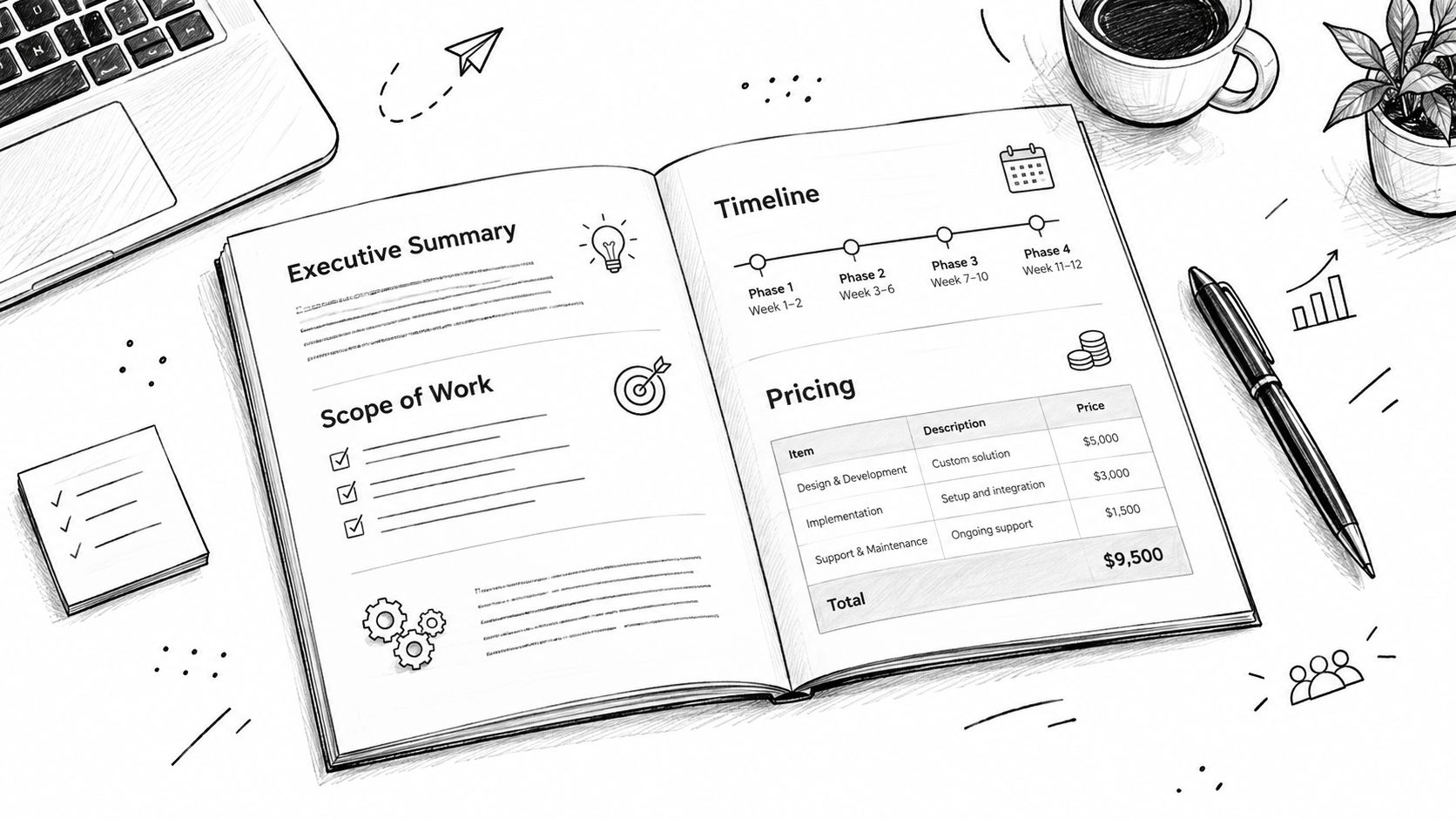
HubSpot's free proposal template is a sensible starting point when a contractor needs more than a quick estimate. It gives you the familiar business-document sequence: introduce the client's situation, describe the proposed work, explain timing, show pricing, and finish with terms and approval. It's available in Word and Google Docs formats, which makes it easy to adapt without buying proposal software first.
The weakness is that the default business language can sound detached from the job. A residential contractor shouldn't write a generic “problem statement” about a client's project. Replace it with a short summary in the client's own terms, such as, “The rear deck boards are weathered, several fasteners are exposed, and the stairs need to remain usable throughout the repair.”
Rewrite it for a real trade job
For a remodeling contractor, keep the summary, scope, schedule, pricing, and approval sections. Cut broad corporate language, lengthy background material, and claims that don't help the homeowner decide. Add:
- Defined deliverables: State exactly what will be installed, repaired, removed, cleaned, or handed over.
- Site assumptions: Note access, working hours, existing-condition assumptions, and who supplies approvals or selections.
- Exclusions: Identify permits, concealed damage, design revisions, disposal, finish matching, or client-supplied materials that aren't included.
- Acceptance condition: Explain what counts as completion, such as installation, cleanup, testing, and a final walkthrough.
Keep the scope to three to five deliverables, with a clear completion condition for each. Then place the total price and payment terms on a page the client can find quickly. Convert the accepted proposal into a separate contract or invoice only after checking that the signed scope and pricing still match.
Practical rule: A polished business proposal becomes a contractor document only when every deliverable, assumption, and exclusion connects to the actual site.
2. Wave Free Invoice and Estimate Templates
Wave's estimate templates suit service businesses that need to quote quickly and turn approved work into an invoice. That workflow is useful for a pressure-washing operator, tutor, cleaner, or small repair business that doesn't need a long sales presentation. The estimate can function as the proposal when the job is straightforward and the client mainly needs a clear description, price, and approval path.
For a pressure-washing job, “Exterior cleaning” is too vague. Write each line as a service and outcome, such as “Driveway cleaning, remove surface dirt and organic buildup from the identified driveway area,” followed by the relevant measurement or site reference. If chemical treatment, sealing, furniture movement, or protection of nearby plants isn't included, say so beneath the line items.
A useful estimate should answer four questions without a follow-up call:
- What gets done: Name the surface, service, method, and expected result.
- What it costs: Separate labor, materials, disposal, travel, and optional work where relevant.
- When the offer expires: Give the client a clear decision window, especially when material or seasonal conditions can change.
- How payment works: State accepted methods, deposit requirements, due dates, and what happens if work is postponed.
For related guidance on keeping estimates and invoices aligned, see this estimate and invoice template guide. Wave's format is efficient, but it can encourage contractors to treat a price list as a complete proposal. It isn't. Add a brief scope paragraph, site assumptions, weather terms, and a change trigger before sending.
For example, a tutor can use the same structure for a block of lessons, but should define session length, cancellation notice, rescheduling, materials, and when unused sessions expire. The format changes very little. The terms change everything.
3. Canva Proposal and Quote Templates
A client opens your Canva proposal on a phone while comparing bids. If the first page shows project photographs but hides the price and scope several pages later, attractive design has created extra work instead of confidence.
Canva helps solo operators produce branded proposals with clean typography, photographs, package descriptions, and a consistent visual style. It suits videographers, designers, photographers, wellness instructors, and contractors whose work benefits from visual proof. For a roofing or landscaping job, use the format to explain the work clearly, not to turn a short quote into a brochure.

Build the proposal around the trade
Start with evidence that helps the client judge the job. A gardening professional might show reference photographs, planting palettes, and a simple concept image. A roofing contractor should label photographs of affected areas and connect each image to the proposed repair. A videographer can use storyboard frames to explain package differences.
For a contractor, keep the document to four working parts:
- Project summary: Name the client's need, the defined work area, and the intended result.
- Scope and pricing: List labor, materials, disposal, exclusions, optional upgrades, deposit, balance, and quote validity on one clear pricing page.
- Relevant images: Include only photographs that clarify the work or demonstrate capability.
- Approval instruction: State how the client can approve, sign, pay, or request a start date.
Cut decorative pages, vague value statements, oversized testimonials, and package names that fail to describe a deliverable. If a roof repair includes only the identified slope, say so. If landscaping excludes irrigation changes, planting removal, or ongoing maintenance, place those exclusions beside the scope rather than hiding them in small text.
Export the completed proposal as a PDF. A mobile-friendly viewing link can help when the client reviews the quote by phone, but it should supplement a document that remains readable and complete.
A yoga instructor may present private sessions and memberships in a visual grid. A contractor needs sharper boundaries. Visual polish supports the sale, while explicit inclusions and exclusions protect the job from assumptions.
4. Jobber Free Quote and Estimate Templates
A client calls about a damaged fence, an overgrown yard, or a repair inside an occupied home. You inspect the site, price the work, get approval, schedule the visit, and invoice the client. Jobber's quote and estimate templates follow that sequence, making them a practical fit for lawn care, cleaning, handyman services, and recurring maintenance.
Use the template as a field document, not a corporate presentation. A garden-design professional can show reference photographs, planting palettes, and a simple concept image. A handyman can separate labor from materials and list each repair. A cleaning company can define rooms, visit frequency, and tasks included at each visit.
Build the quote around the actual site
Site photographs earn their place when they define the work. Label the exact fence section, lawn area, roof slope, or damaged trim shown in each image. This gives the client a clear boundary and reduces assumptions about nearby areas.
Recurring service needs a different price structure from a one-time job. Show the initial cleanup, treatment, or repair separately from weekly, biweekly, or seasonal visits. Otherwise, the client may read a recurring charge as the full cost of the first service.
Use short, operational terms for the details that affect delivery:
- Service frequency: State whether the work is one-time, recurring, seasonal, or requested as needed.
- Access requirements: List gates, parking, water, electricity, pets, occupied rooms, and other site conditions.
- Revision triggers: Identify hidden damage, changed measurements, added areas, client-requested work, and unsuitable conditions that may change the price.
- Validity period: State how long the quoted price remains available.
Jobber's field-service format keeps approval and scheduling close to the quote. Its shorter format can leave risk undocumented, so add a clear change-order rule. If site conditions or requested work change the job, pause the affected work, describe the revised scope and price in writing, and proceed after client approval. That protects the contractor without burying the customer in company background or generic sales language.
5. Bonsai Freelance Proposal Templates
A Bonsai proposal makes sense when one independent contractor handles the offer, agreement, signature, and invoice. A web designer, marketing consultant, photographer, or IT specialist can keep those steps together instead of copying the same details into separate documents. For a trade contractor, the value depends on how much the template is adapted before it reaches the client.
Start with the job, not the software's default sections. Keep the client and project details, defined deliverables, schedule, price, acceptance, and payment terms. Cut broad service descriptions, portfolio-style company history, and any generic sales copy that does not help the customer approve the work.
A three-tier structure can help when the client has not settled on a budget or service level. A web designer might offer a landing page, a full site build, and a site with ongoing support. Each option should change the work or responsibility. If the choices only rename the same service, they create confusion rather than a useful decision.
Turn packages into workable trade scopes
For a handyman, package pricing needs a practical shape. One option could cover the base repair, another could include replacement of a specified component, and a separate allowance could address concealed conditions. State the assumptions behind each price, such as the accessible work area, included materials, and finish standard.
A consultant's retainer might define meetings, reports, campaign work, and response times. A contractor should replace those fields with measurable work items, completion conditions, and exclusions. Keep the proposal short enough to approve, while placing detailed legal terms in the linked agreement.
Extra work needs its own approval path. If the client requests a change, describe the added task, price, and schedule effect. If concealed conditions affect the work, document the condition and identify the affected portion before proceeding. Written approval should update the job record. If the client declines, complete the original scope where possible and record what remains unresolved.
Place the deposit requirement beside acceptance. State whether it is refundable, what it reserves, and how cancellation or postponement affects scheduling. Enforceability varies by jurisdiction, so local counsel should review terms when the job or deposit exposure is material.
6. HoneyBook Proposal Templates
HoneyBook's templates are designed for a client experience that combines the package, price, retainer, contract, and online payment step. That works well for photographers, videographers, planners, music teachers, and other creative or instructional professionals whose clients are booking a defined service rather than comparing construction quantities.
A wedding photographer can describe a package as an outcome, such as full-day coverage with an edited gallery, rather than listing equipment and hourly tasks. A music teacher can define the term schedule, lesson format, payment cadence, make-up policy, and cancellation rules. In both cases, the client wants to know what the relationship produces and how the booking works.
Match payment timing to exposure
The proposal should make the retainer or deposit visible at the moment of acceptance. It should also identify the remaining balance due date, the service date or delivery condition connected to that balance, and the operational result of late payment.
Recent payment research illustrates why this matters across contractor work, not only creative services. The PYMNTS construction payment report states that 71% of subcontractors reported delayed payments, the average cycle for completed work reached 57 days, and 77% paid for materials out of pocket. Those figures make the payment schedule a risk-control tool, not an administrative afterthought.
A proportionate structure might include a booking payment before mobilization, materials funded before purchase, milestone payments on longer work, and a final balance tied to defined completion. It doesn't always make sense to demand the largest possible upfront amount. A transparent schedule can reduce client resistance while keeping the contractor from financing materials and labor.
Keep cancellation, rescheduling, late-payment, and work-suspension terms together. The proposal may be friendly and polished, but the contract still needs operational language that tells both parties what happens when the original plan changes.
7. Proposify Sales Proposal Templates
Proposify treats the proposal as a sales asset rather than a static attachment. Interactive pricing, electronic signatures, and engagement information can help a consultant or service provider understand how a prospect is reviewing the offer. An IT consultant might present managed-service tiers, while a marketing freelancer can use a tracked proposal to time a useful follow-up.
That tracking is only valuable when it changes your behavior. A notification that a client has opened the proposal shouldn't produce a generic “just checking in” message. It should prompt a specific question about the section they may be weighing, such as whether the support tier includes emergency response or whether the implementation schedule fits their launch date.
Use interactivity without hiding the offer
Limit selectable choices to two or three. Too many combinations create work for the buyer and make the final price harder to understand. Each option should show a clear total and state what changes between the choices.
For a cleaning business, a proposal could separate recurring maintenance from a one-time deep clean, then identify add-ons such as interior appliances or window work. The cleaning service business proposal guide is a useful reference for structuring that kind of offer, but a contractor still needs to adapt the scope to the actual property.
Use reusable content blocks for the parts that should remain consistent, such as payment terms, warranty language, and approval instructions. Rewrite the scope, assumptions, photographs, schedule, and exclusions for every job. Standardization should protect quality, not replace inspection.
A tracked proposal is not permission to chase harder. It's a signal to answer the client's likely question while the details are still fresh.
For a solo operator, the most valuable feature may be less about analytics and more about reducing missed steps. If the platform makes it easy to sign, pay, and retain the approved scope in one place, it can reduce the gap between “looks good” and “work is authorized.”
8. AIA A101 Standard Form of Agreement Between Owner and Contractor
AIA A101 suits a fixed-price construction agreement where the parties need clear rules for the contract sum, scope, payments, insurance, changes, and disputes. A general contractor handling a commercial tenant improvement might use an AIA-based agreement. A subcontractor should check flow-down provisions before accepting assigned work.
A small residential contractor should not paste a formal construction agreement into a proposal without understanding its language. Extract the protections that fit the job, then present them in a document the client can read and approve.
Start with the job's risk points
A fixed-price proposal needs a scope detailed enough to support the price and a process for work outside it. State the amount due, the trigger for each payment, required documentation, and the effect of late payment. Define who can authorize extra work and whether verbal requests have any effect.
For a shorter contractor agreement, keep these working parts:
- Scope: List the work, materials, finish level, exclusions, and handoff condition.
- Payment: Tie each payment to a date, milestone, delivery, or approved material purchase.
- Changes: Require written approval for price or schedule changes before added work begins.
- Insurance and licensing: Confirm required coverage, permits, and credentials in writing.
- Disputes: State the escalation path and governing terms, subject to local legal review.
Cut generic clauses that do not match the trade or project. Add site access rules, customer-supplied materials, cleanup responsibilities, testing or inspection requirements, and a clear start condition where those issues affect the work. For electrical projects, compare the structure with this electrical contract agreement format. The Action Accountants Limited contract guide provides general background on business contracts, while local legal advice is appropriate for enforceability and jurisdiction-specific requirements.
The practical test is simple. Can the client identify what is included, what triggers payment, and how an extra request changes the price? If not, shorten the legal wording and sharpen the commercial terms.
A proposal is not the contract until the parties approve the scope and terms. Keep the signed version with the estimate, change approvals, and relevant project records.
The following video provides another visual reference for comparing proposal formats and workflows.
8-Point Contractor Proposal Comparison
| Template | Implementation complexity 🔄 | Resource requirements & cost ⚡ | Expected outcomes & impact 📊⭐ | Ideal use cases 💡 | Key advantages ⭐ |
|---|---|---|---|---|---|
| HubSpot Free Proposal Template | Low, simple Word/Google Doc, manual processes | Minimal, free download; needs Word/Google access | Standard, professional proposal structure; no e-signature or tracking | Freelancers or small businesses needing a fast, editable starting point | Free, familiar layout, easy to customize |
| Wave Free Invoice and Estimate Templates | Low–Moderate, platform workflow for estimates → invoices | Low, free tier; payment processing fees may apply | Accurate line-item estimates converting into invoices; basic bookkeeping link | Small service businesses needing quoting tied to billing (e.g., tutors, trades) | Connects quotes to billing and accounting; automatic calculations |
| Canva Proposal and Quote Templates | Low, design-focused, manual signing/billing | Low–Medium, free tier; premium assets or Pro for brand kit | Visually polished, branded proposals; manual payment and tracking | Creative and wellness professionals prioritizing presentation | Strong visual branding with minimal design effort |
| Jobber Free Quote and Estimate Templates | Low–Moderate, built for field workflow and mobile use | Low for templates; full platform requires subscription | Job-specific quotes that feed scheduling and invoicing (with platform) | Route-based home services (lawn care, cleaning, handyman) | Industry-specific language; on-site estimating; approval flows |
| Bonsai Freelance Proposal Templates | Moderate, integrated proposal → contract → invoice workflow | Medium, subscription required for full features | Combined proposal, e-signature, and billing reduces follow-up | Freelancers and consultants who want one-link client acceptance | Built-in e-signature and conversion to contracts/invoices |
| HoneyBook Proposal Templates | Moderate, unified proposal + contract + payment workflow | Medium, subscription and transaction fees | Single client-facing booking experience with retainers and payments | Event-based and booking businesses (photographers, planners) | All-in-one booking, contract, and payment collection with reminders |
| Proposify Sales Proposal Templates | Moderate–High, interactive pricing and analytics setup | Medium–High, subscription; setup time to build content library | Trackable, interactive proposals that inform timely follow-up | Sales teams and service firms needing engagement analytics | Engagement tracking, interactive pricing, reusable content blocks |
| AIA A101 Standard Form | High, lengthy, legal-heavy contract requiring review | High, licensed form; often legal/administrative support needed | Comprehensive allocation of risk, payments, change orders for construction | Commercial/institutional construction projects and large contractors | Industry-recognized, thorough legal and project-administration coverage |
Turn These Examples Into Your Own Proposal Template
A contractor proposal doesn't need to look impressive to everyone. It needs to make one real job easy to approve, price, schedule, perform, and close out. Start with the template that resembles your trade, then remove anything that doesn't help the client understand the work or help you control the risk.
Build the document in this order:
- Name the client and job: Include the property, service address, proposal date, and the person authorized to approve the work.
- Summarize the situation: Describe the client's request in plain language, using the conditions you observed.
- Limit the scope: Use three to five deliverables, and define what completion means for each one.
- List inclusions and exclusions: State materials, labor, preparation, cleanup, disposal, access assumptions, client responsibilities, and concealed-condition limits.
- Show the price clearly: Put the base total on one page, separate optional work from the base scope, and identify allowances instead of hiding uncertainty.
- Set the schedule: Give an expected start window, work sequence, client dependencies, and conditions that can affect timing.
- State payment terms: Explain the deposit, milestones, final balance, payment methods, due dates, and the operational response to late payment.
- Document changes: Require a written description and approval before extra work begins, except where immediate action is necessary to protect people or property.
- Finish with acceptance: Give the client one clear action, such as sign, approve online, pay the deposit, or schedule a call.
Don't copy all eight formats. Pick the two closest to your trade, then rewrite their pricing and terms for one real job you're bidding now. Send that revised version, record how long it took to prepare, and note where the client asked questions. Those questions reveal which assumptions still need to become visible in the proposal.
A contractor who wants estimates, e-signature, deposits, contracts, invoices, and online payments in one link can review AurenWell's workflow for solo service businesses. It is designed for the administrative layer between completing a job and receiving payment. For businesses comparing operational tools, this guide to choosing a dispatch platform may also help clarify whether dispatch features are necessary for your work.
Use the next proposal as a controlled test, not a permanent masterpiece. Keep the scope readable, put the money where the client can find it, and make the change process explicit before anyone starts work. That is how a template becomes a working contractor document.